
Thinking about spending next summer working in another country? Maybe you want to save some money between university semesters, practice a foreign language in real life, or just escape your routine for a few months without spending all your savings on hotels and flights.
Most people think a summer job abroad just means waiting tables at a beach bar. While hospitality hires thousands of workers every year, seasonal job boards actually offer way more variety, from teaching kids to kayak at a US summer camp to working in a customer support office in Lisbon or Barcelona. For HR managers and seasonal recruiters, understanding these differences is just as important. Today’s candidates want clear details about daily routines, housing, and team culture before they pack their bags.
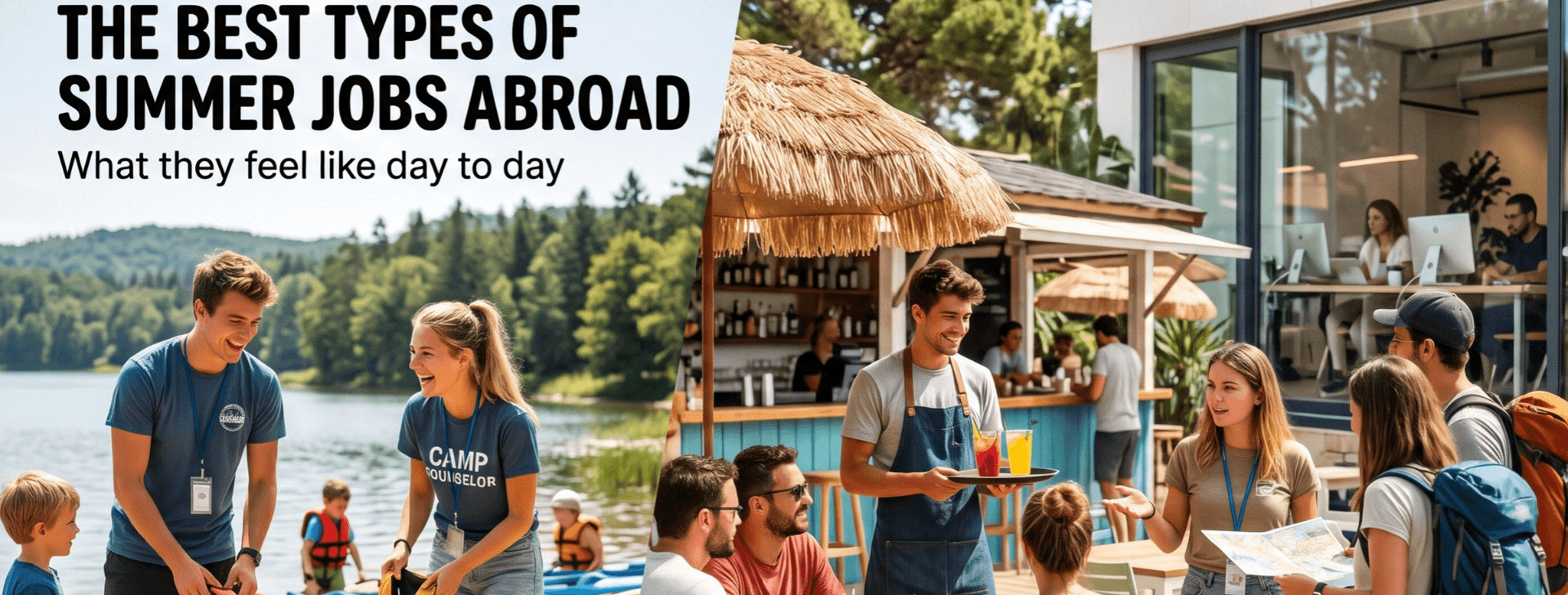
Here is a practical breakdown of the main types of summer jobs abroad, what they feel like day to day, and how candidates and recruiters can find the right fit.
Why are there so many different types of summer jobs abroad?
Every summer, millions of tourists head to the coast, the mountains, and major European cities. Local businesses suddenly need double or triple their usual staff for three to five months, and local workers alone cannot cover all those shifts. That is where international seasonal workers come in.
For companies, hiring international staff for the summer is no longer just a backup plan, it is how they keep their operations running smoothly during peak season. For you as a candidate, it is one of the easiest ways to live abroad with a clear start and end date, meet people from all over the world, and add real international experience to your CV.
If you want to see what kind of roles are already opening up for the upcoming season, you can browse the latest summer jobs abroad on Anywork Anywhere and filter by country, language, or sector.
1. Hospitality and resort summer jobs
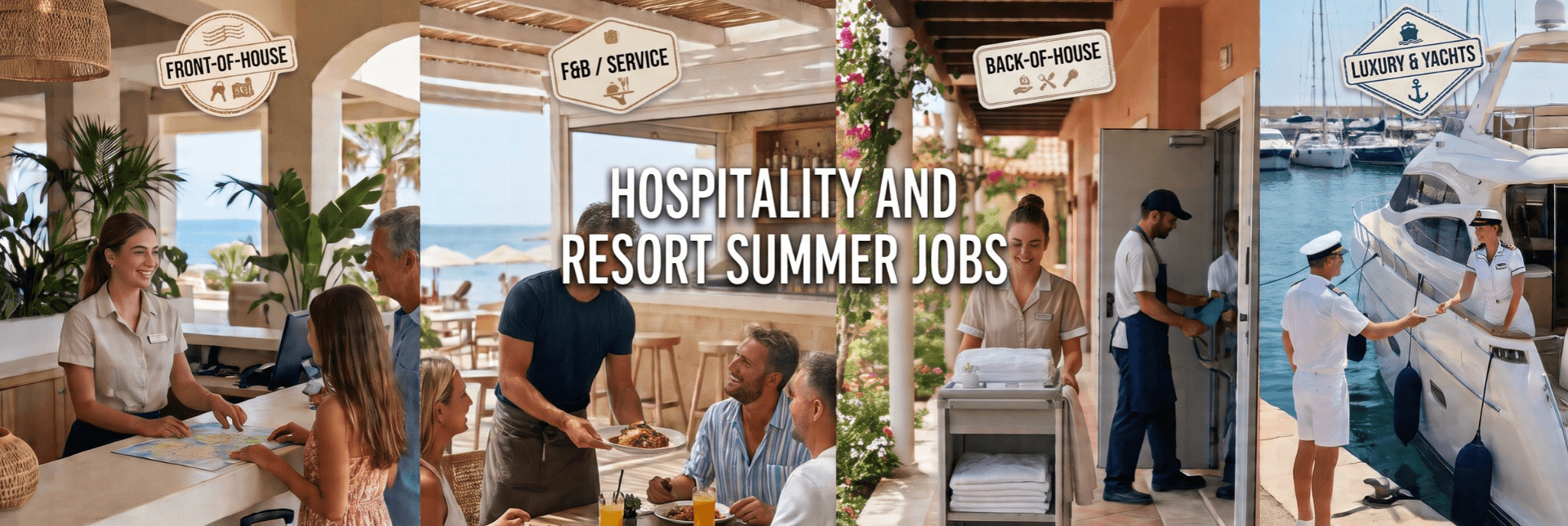
Hospitality is the biggest employer for summer workers, especially in Spain, Greece, Portugal, Italy, Croatia, and the UK. However, working at a hotel reception is completely different from working in a kitchen or at a beach club. Here is how the main hospitality roles differ from one another.
Hotel and Resort Front-of-House
- Common roles: Receptionist, guest relations agent, concierge, night auditor, reservations assistant.
- What the day-to-day feels like: You are the first person guests meet when they arrive and the person they call when they need help. Shifts revolve around checking guests in and out, recommending local beaches or restaurants, solving small room issues, and coordinating with housekeeping. In big resorts, guest relations agents often look after specific language groups, welcoming German, French, Dutch, or Italian guests in their native language.
- Ideal profile: Calm, organized communicators who enjoy solving problems and speak English plus at least one other European language.
- HR Insight: Multilingual candidates usually receive multiple offers early in spring. Recruiters get much better response rates when they clearly state language bonuses, shift rotations, and weekly days off right in the job description.
Bars, Restaurants, and Beach Clubs (Food and Beverage)
- Common roles: Waiter, waitress, bartender, barista, pool bar attendant, beach club server.
- What the day-to-day feels like: Fast, loud, and social. In party islands or busy coastal towns, shifts often run late into the night, while hotel restaurants usually require split shifts for breakfast and dinner. The physical pace is intense during lunch and dinner rushes, so comfortable shoes are essential, but you also get strong team bonding and the chance to earn tips on top of your base salary.
- Ideal profile: Energetic, outgoing people who dislike sitting still and enjoy working in a lively, social team.
- HR Insight: Staff burnout in August is the main cause of turnover in summer F&B. Bars and restaurants that provide free staff meals, divide tips transparently, and respect weekly rest days retain their teams far better through peak season.
Kitchens, Housekeeping, and Maintenance (Back-of-House)
- Common roles: Kitchen assistant, prep cook, pizza maker, pastry helper, dishwasher, housekeeping attendant, maintenance worker.
- What the day-to-day feels like: You work behind the scenes to keep the hotel or restaurant running. Instead of dealing with tourist requests for eight hours, you work closely with a small team preparing food, cleaning rooms, or fixing equipment. Shifts are physically demanding, yet much more predictable, once your shift ends, you clock out and go home.
- Ideal profile: Reliable, practical workers who prefer clear routines, teamwork behind the scenes, and roles that do not require fluent English.
- HR Insight: Because back-of-house roles do not require guest-facing language skills, HR managers can widen their candidate pool significantly by highlighting on-the-job training and welcoming applicants with basic English.
Luxury Yachts, Cruises, and Private Villas
- Common roles: Yacht deckhand, stewardess, private villa host, cruise ship hospitality crew.
- What the day-to-day feels like: High-end service with strict attention to detail. Days are long because guests pay premium prices for five-star experiences, and living quarters on boats are compact. In return, you travel between exclusive coastal ports and earn much higher salaries and tips than in standard hotels.
- Ideal profile: Adaptable workers, usually with some prior hospitality experience, who want to maximize their summer savings while traveling.
2. Summer camp and childcare jobs
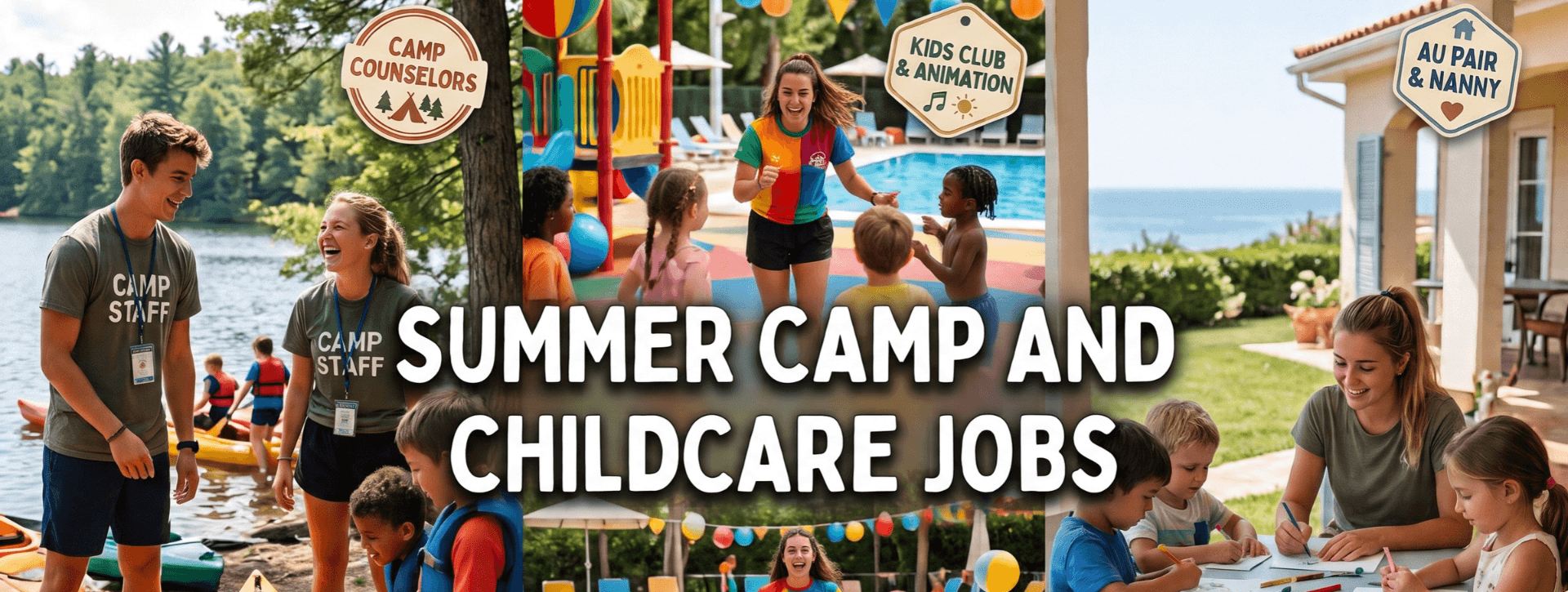
Working with children and teenagers is one of the most popular ways to spend a summer abroad, mainly because accommodation and meals are almost always included in the contract.
Summer Camp Counselors
- Common roles: General camp counselor, climbing instructor, lifeguard, archery coach, arts and crafts leader, sports coach.
- What the day-to-day feels like: Available mostly in the US, Canada, and international camps across Europe, camp life is completely immersive. You live on-site in cabins with an international staff team, supervise a group of campers, lead outdoor games, organize campfires and eat meals together. You spend almost all day outside and rarely check your phone.
- Ideal profile: Patient, creative, high-energy people who love the outdoors and want a strong sense of community.
- HR Insight: Camp directors look primarily at attitude, empathy and leadership rather than long CVs. Highlighting pre-camp training weeks, staff community and post-camp travel opportunities attracts candidates who stay committed until the final day.
Resort Kids Club Entertainers and Animation Teams
- Common roles: Kids club leader, sports animator, fitness instructor, evening show entertainer.
- What the day-to-day feels like: Popular in Mediterranean family resorts, this role follows a structured daytime and evening schedule. During the day, parents drop off children for crafts, pool games, and treasure hunts, while adult entertainers run aqua gym or beach volleyball. In the evening, the whole team hosts mini-discos, quizzes, or family shows.
- Ideal profile: Outgoing, expressive candidates who speak two or more languages and enjoy dancing, performing, and organizing group games.
- HR Insight: Multilingual entertainers are often the reason families book the same resort again. Recruiters should specify the main nationalities of their resort guests so candidates know which languages they will actually speak at work.
Au Pair and Summer Nanny Roles
- Common roles: Live-in summer au pair, holiday nanny, language tutor for children.
- What the day-to-day feels like: Much quieter and more personal than a resort or camp. You live directly with a host family, either at their main residence or at their summer vacation home by the sea, and help look after their children during school holidays. In exchange, you get a private bedroom, all your meals, and weekly pocket money.
- Ideal profile: Responsible, independent travelers who speak the required language and prefer living like a local rather than working in a large tourist team.
- Where to look: You can check out current au pair and childcare jobs to see what families and resorts are looking for this season.
3. Outdoor, nature and sports summer jobs

If working indoors makes you feel restless, outdoor tourism and sports roles let you spend the summer in nature and turn your hobbies into a paycheck.
Campsite and Holiday Park Staff
- Common roles: Campsite courier, park receptionist, pool attendant, site maintenance helper.
- What the day-to-day feels like: Large holiday parks in France, Spain, Italy, Croatia, and the Netherlands operate like mini-villages. As a campsite courier, you prepare tents or mobile homes before families arrive, welcome guests on check-in day, handle small maintenance requests, and keep the grounds tidy. The atmosphere is relaxed and friendly.
- Ideal profile: Easygoing, hands-on people, including couples or pairs of friends who want to apply together and share accommodation.
- HR Insight: Allowing couples or two friends to apply together and share a mobile home is one of the smartest ways for holiday parks to prevent early-season dropouts.
Watersports and Coastal Activity Instructors
- Common roles: Surf coach, sailing instructor, diving instructor, kayak guide, beach equipment rental assistant.
- What the day-to-day feels like: From surf schools in Portugal to sailing centers in Greece and kayak tours in Croatia, coastal centers expand fast in summer. Certified instructors lead lessons on the water, while non-certified beach assistants manage equipment rentals, welcome customers, and help with safety boats, usually getting free access to boards and kayaks on their days off.
- Ideal profile: Sporty, ocean-loving individuals who feel comfortable working in the sun and water all day.
- HR Insight: Certified instructors get booked up early. Activity centers that recruit between January and March and offer free gear use or certification discounts fill their rosters much faster than those waiting until May.
Alpine and Mountain Summer Staff
- Common roles: Mountain hotel receptionist, hiking trail guide, bike park mechanic, spa assistant, alpine hut server.
- What the day-to-day feels like: Between June and September, ski towns in the Alps, Pyrenees, and Scottish Highlands fill up with hikers, mountain bikers, and wellness travelers. Life in the mountains is cooler, calmer, and more nature-focused than crowded beach resorts, with tight-knit staff communities.
- Ideal profile: Nature lovers who enjoy hiking or mountain biking and want to avoid extreme summer heat.
- HR Insight: Mountain employers stand out by offering back-to-back seasonal contracts (summer plus winter ski season), which appeals strongly to candidates looking for longer-term stability in one region.
4. Tourism, events and culture summer jobs

Beyond beaches and campsites, historic cities and major live events need seasonal staff to guide visitors and manage summer crowds.
Tour Guides and Destination Excursion Reps
- Common roles: City walking-tour guide, museum guide, airport transfer rep, excursion sales rep.
- What the day-to-day feels like: Tour guides lead groups through historic neighborhoods, food markets, or scenic trails, sharing local stories. Excursion reps work in holiday hotspots, welcoming tourists at the airport, coordinating transfer buses, and organizing boat trips or wine tastings.
- Ideal profile: Confident public speakers and storytellers who enjoy meeting travelers from all over the world.
- HR Insight: When hiring tour guides and reps, natural curiosity, punctuality, and calm problem-solving at a busy airport matter far more than memorized historical dates, which can easily be taught during onboarding.
Music Festivals, Sporting Events and Theme Parks
- Common roles: Ticket scanner, stagehand crew, merchandise seller, VIP hospitality host, theme park ride operator.
- What the day-to-day feels like: Theme park contracts usually last for the entire summer at one location, while festival work lets you work intense, high-energy weekends, often with free festival entry, crew camping, and meals included.
- Ideal profile: Flexible workers who love live music, sports, or entertainment, or candidates who only have a few weeks free.
- HR Insight: Event organizers who offer multi-event schedules, allowing reliable crew members to move seamlessly from one festival to the next, see much higher retention than organizers hiring one-off casual staff.
5. Office, customer support, teaching and farm summer jobs

Not every summer job abroad involves working in tourism. Several corporate, educational, and agricultural sectors also hire heavily for the summer months.
Multilingual Customer Service and Travel Support
- Common roles: Customer support agent, travel booking specialist, airline support representative, content moderator.
- What the day-to-day feels like: During peak travel months, airlines, booking platforms, and car rental companies face huge spikes in customer inquiries. International hubs in cities like Lisbon, Barcelona, Athens, Sofia, and Malta hire fixed-term agents for the summer. You work regular office hours in air conditioning with paid training, leaving your evenings and weekends free for the beach and city life.
- Ideal profile: Recent graduates or students who speak fluent English plus another European language and want corporate experience on their CV.
- HR Insight: Highlighting relocation assistance, paid training, and the chance to convert a summer contract into a permanent position helps corporate hubs attract ambitious graduates.
Summer Language Teaching and TEFL Roles
- Common roles: Summer English teacher, EFL tutor, language camp activity coordinator.
- What the day-to-day feels like: Language schools in the UK, Ireland, Malta, and Spain run two-to-eight-week summer programs for international teenagers and adults. Mornings are spent teaching conversational English classes, while afternoons involve leading sports, museum visits, and city tours.
- Ideal profile: Candidates with a TEFL, CELTA, or teaching certificate, or native-level English speakers with youth leadership experience.
- HR Insight: Language schools that include residential accommodation fill their July and August teaching roles much faster, since short-term summer rentals in cities like London or Dublin are hard to find independently.
Agricultural, Vineyard, and Farm Work
- Common roles: Fruit picker, vineyard worker, farm hand.
- What the day-to-day feels like: Common in Australia, New Zealand, France, Italy, and the UK, farm work involves early mornings outdoors harvesting berries, stone fruits, vegetables, or early grapes. Pay is usually hourly or based on the weight you pick, and life is quiet and rural.
- Ideal profile: Hardworking, independent travelers, especially Working Holiday Visa holders looking to save money quickly in low-cost rural areas or qualify for a second-year visa extension.
- HR Insight: Farms that clearly explain hourly versus piece-rate pay, provide safe on-site housing, and offer transport to nearby towns build a strong reputation and avoid mid-harvest staff shortages.
How do visas, contracts and pay work for seasonal summer jobs?
Before sending out applications, both candidates and HR managers benefit when expectations around paperwork, housing, and salaries are clear from the beginning.
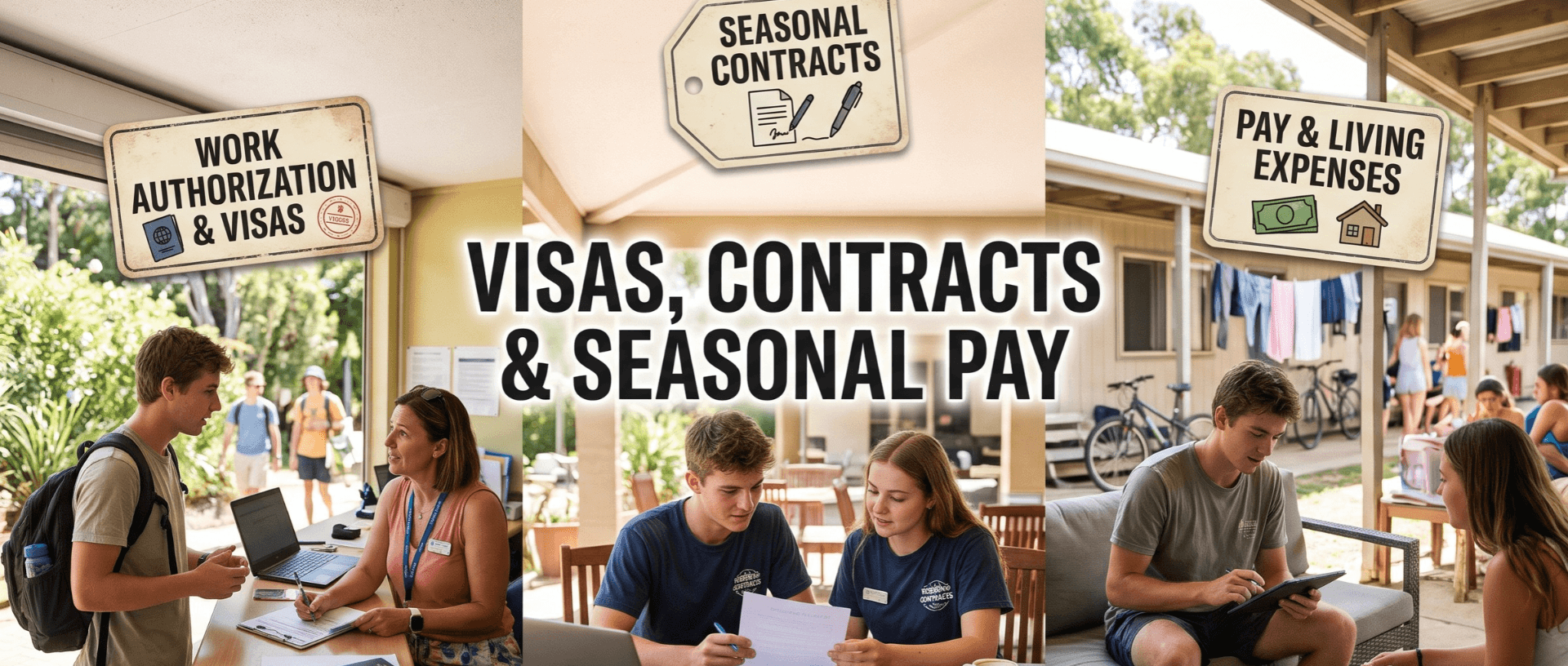
Work authorization and visas
- EU and EEA citizens: You can live and work in any EU country without a visa. Relocating to Spain, Greece, France, Italy, Portugal, or Croatia simply requires registering locally for a tax or social security number after arrival, which most seasonal employers help you organize.
- Non-EU and international travelers: If you are traveling outside your home region, such as UK citizens heading to the EU, EU citizens going to Australia or Canada, or international students applying for US summer camps, you will need an appropriate visa, such as a Working Holiday Visa, seasonal worker permit, or J-1 cultural exchange visa. Always check processing times months in advance.
Looking beyond the base salary
Comparing summer jobs purely by monthly salary can be misleading. A role paying €1,000 a month with a free private room, three daily meals, and bills included leaves you with far more savings than a role paying €1,600 a month in a coastal hotspot where rent alone costs €800.
Before signing any contract, verify four key details:
- Whether staff housing is completely free or deducted from your paycheck.
- If accommodation is a private room, shared twin room, or staff apartment.
- Whether meals are included on working days only or all seven days of the week.
- How overtime hours, tips, and end-of-season bonuses are paid out.
How can candidates choose the right type of summer job?

If you are still deciding which sector fits you best, ask yourself four quick questions before applying:
- Do you want to save money or just fund your trip? If saving money is your priority, choose roles with housing and meals included, like summer camps, campsites or all-inclusive resorts.
- How much social energy do you have? If you love meeting new people every day, pick bartending, resort animation, or tour guiding. If you need quiet time after work, choose back-of-house hotel roles, farm work, or daytime office support.
- Do you want CV value for a corporate career? If you just finished university, roles in guest relations, event coordination, summer teaching, or multilingual customer support translate easily onto a professional resume.
- How many weeks are you free? Resorts and campsites usually want staff from May or June until September. If you only have four to six weeks between exams, look at summer language camps, festivals, or short-term au pair roles.
Once you know what fits your goals, check out all current seasonal work opportunities on Anywork Anywhere to compare locations, benefits, and start dates side by side.
How should HR managers structure seasonal job offers to attract top talent?
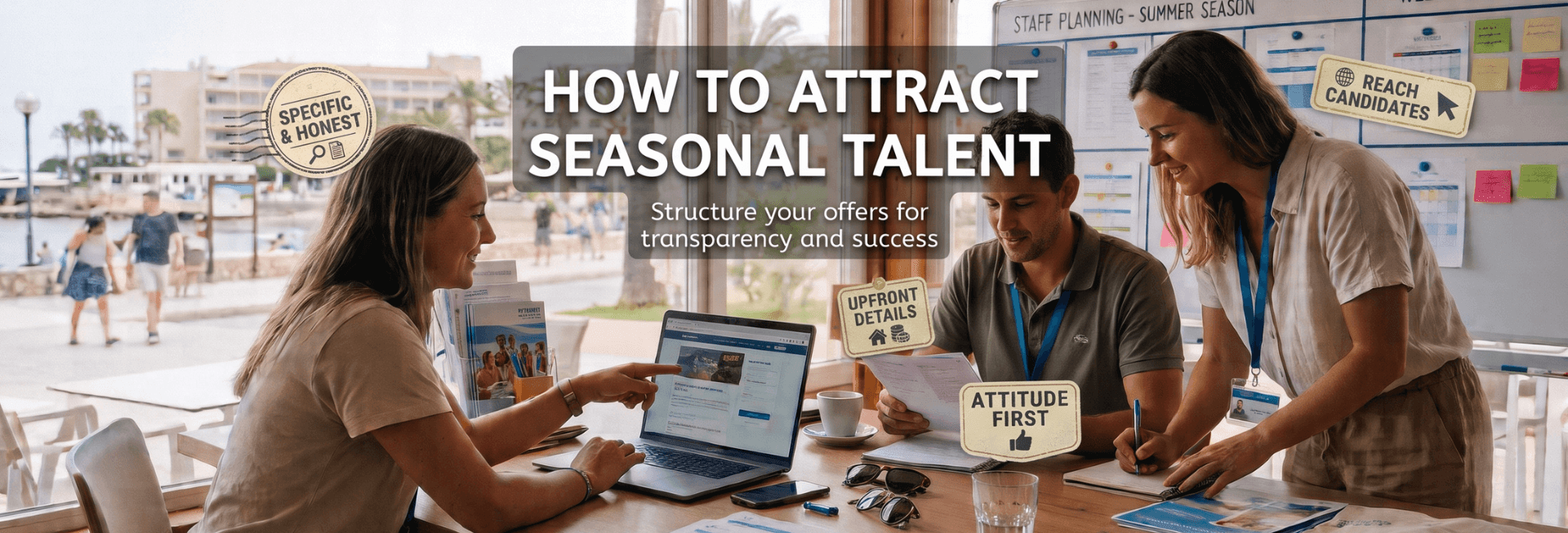
Seasonal recruitment moves fast, and candidates often compare multiple countries at once. HR teams and hiring managers who make the relocation decision look simple fill their roles earlier and deal with far fewer mid-season dropouts.
- Write specific, honest job descriptions: Replace generic “Summer Staff Wanted” ads with clear details about daily shifts, guest nationalities, and peak-season pace so candidates know what they are signing up for.
- Be upfront about housing, pay and hours: State clearly whether accommodation is free, subsidized, shared, or private, and mention if meals, uniforms, and local transport are included. Transparency builds immediate trust.
- Hire for attitude and train for skills: Waiting for candidates with five years of exact experience often leaves roles empty until July. Prioritize reliability, positive energy, and clear English, then provide practical training during week one.
- Reach international candidates where they already search: Posting only on domestic job boards limits your reach when local labor markets are tight. Using a specialized international platform puts your vacancies directly in front of candidates planning to relocate, you can post a job on Anywork Anywhere to reach seasonal job seekers across Europe and beyond.