
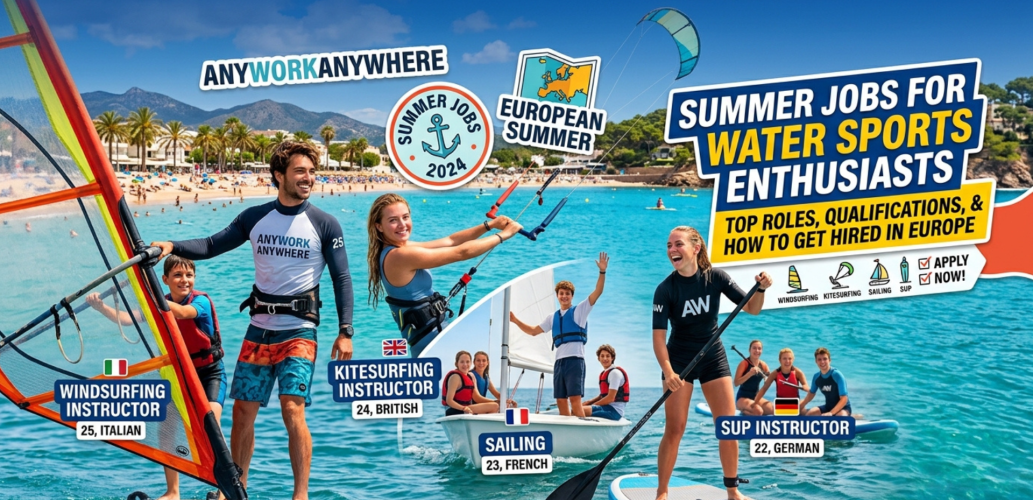
Do you want to spend your days in the sun, meeting international friends, and earning a paycheck while living right by the beach? If you love the water and want an exciting seasonal experience abroad, working in water sports might just be your dream opportunity.
Every year, thousands of young travelers, students, and active professionals pack their bags to work at European beach resorts, surf camps, coastal holiday parks, and outdoor adventure centers. The summer tourism season creates an enormous surge in demand for energetic, outdoor-minded individuals who can keep guests safe, teach new skills, and bring positive energy to coastal teams.
Whether you are an experienced surfer or kayaker, a strong swimmer, or simply someone who thrives in a coastal environment, there is a seasonal job waiting for you. But how do you stand out in the application pile? What qualifications do you actually need before you apply? And how can you make sure you land a job that offers great perks like free accommodation and equipment use?
In this comprehensive guide, we will walk you through everything you need to know about landing summer jobs for water sports enthusiasts in Europe. We will break down the top roles, outline the exact certifications employers look for, reveal what recruiters actually want to see on your CV, and show you how to start applying today.
Why choose summer jobs for water sports enthusiasts in Europe?
Working a seasonal job outdoors is completely different from a standard 9-to-5 office gig. When you work at a beach resort, watersports center, or summer camp, your workplace is the coastline. But beyond the obvious benefit of living this reality, why should you consider applying for water sports summer jobs this coming season?
Earn money while lowering your living expenses
One of the biggest financial struggles when traveling or living abroad is paying monthly rent and grocery bills. Many seasonal water sports employers, particularly large holiday resorts, beach clubs, and summer camps, offer package deals that include free or heavily discounted staff accommodation, on-duty meals, and emergency medical insurance. When your room and board are covered, a huge portion of your monthly wage goes straight into your savings account or your weekend travel fund.
Develop high-value soft skills that boost your resume
Working in water sports is not just about having fun in the sun, it builds serious professional resilience. Every single day, you will practice leadership, group management, clear communication, rapid problem-solving, and international teamwork. If you can confidently instruct a group of twelve nervous beginners on how to balance on a paddleboard in choppy water, you can handle almost any high-pressure situation in a future corporate or marketing career.
Experience true cultural immersion and global networking
When you join an international beach crew, you live and work alongside people from every corner of the world. You will work with colleagues from Spain, France, Germany, the UK, the Netherlands, and beyond. You will naturally improve your English conversational skills, pick up phrases in new languages, and build a global network of friends who can host you whenever you travel in the future.
The top summer water sports jobs in high demand
The seasonal water sports industry spans many different niches, catering to various skill levels and personality types. You do not need to be an Olympic athlete to find a role that fits your abilities. Here is a detailed breakdown of the most popular and rewarding summer jobs for water sports enthusiasts available across Europe and international destinations.
1. Surf instructor
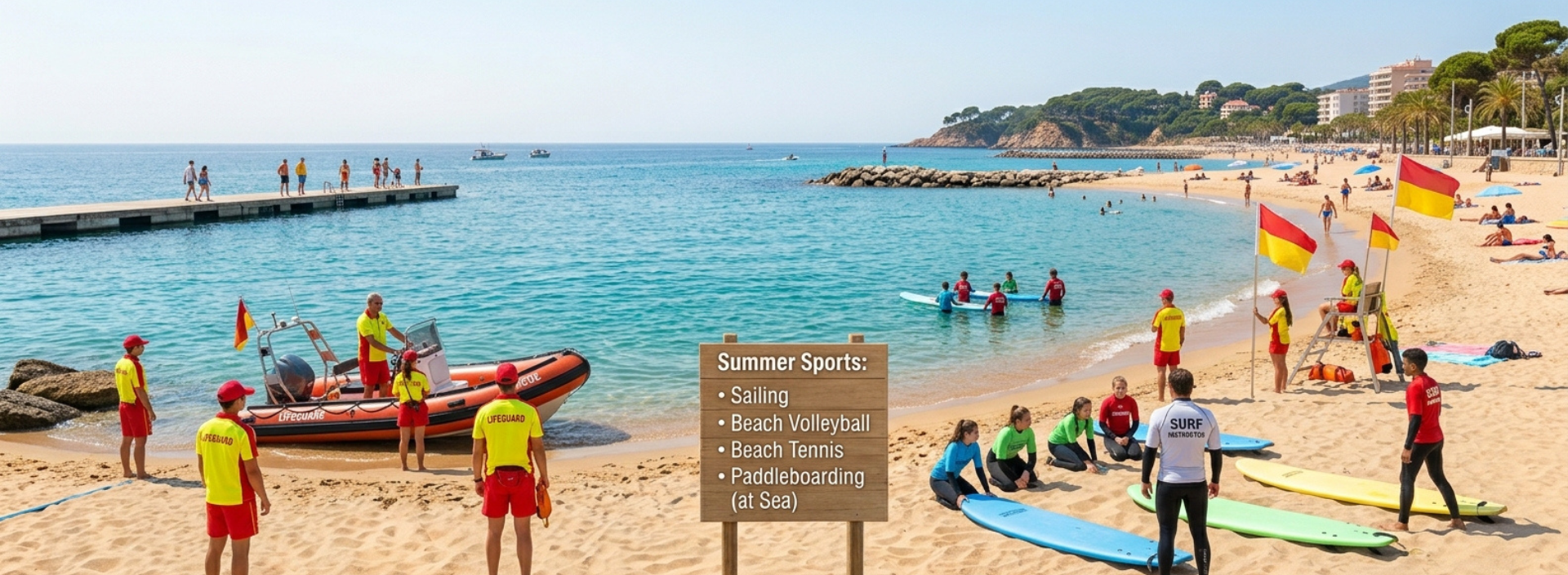
Surf instructing is widely considered one of the coolest summer jobs on the planet. As a surf instructor, your daily routine consists of running warm-ups on the sand, explaining wave dynamics, demonstrating pop-up techniques, and helping students catch their very first waves safely.
- Primary responsibilities: Plan and deliver engaging surf lessons for individuals or groups, analyze ocean conditions and tide safety, maintain surfboards and wetsuits, and host social events at surf camps.
- Key qualifications needed: International Surfing Association (ISA) Level 1 Surf Instructor certification (or equivalent national board qualification like FPS or Federation-specific licenses), along with an accredited Surf Life Saving / Beach Lifeguard certificate.
- Ideal locations: Portugal (Ericeira, Peniche, Algarve), Spain (Basque Country, Cantabria, Canary Islands), France (Hossegor, Biarritz), and the United Kingdom (Cornwall).
- Why HR managers love hiring surf instructors: Surf instructors demonstrate exceptional enthusiasm, high emotional intelligence, and an innate ability to make customers feel safe and encouraged when stepping outside their comfort zone.
2. Beach lifeguard
If you are a powerful swimmer with a high sense of responsibility, working as a beach lifeguard is one of the most respected and vital roles on the waterfront. Lifeguards are the primary line of defense for beach safety, ensuring that holidaymakers can enjoy the water without risk.
- Primary responsibilities: Actively scan designated swimming zones, enforce water safety rules, educate beachgoers about rip currents, respond instantly to swimmers in distress, administer first aid, and maintain beach safety equipment.
- Key qualifications needed: A recognized National Vocational Beach Lifeguard Qualification (NVBLQ), International Lifesaving (ILS) accreditation, or equivalent national lifeguard certification, plus up-to-date First Aid and CPR certifications.
- Ideal locations: Mediterranean coastal resorts in Greece, Italy, Cyprus, Spain, Malta, and summer camps across North America and Europe.
- Why HR managers love hiring lifeguards: Lifeguards possess unmatched situational awareness, composure under pressure, and strict attention to safety protocols. Employers across all industries value candidates who take duty of care seriously.
3. Kayak and stand-up paddleboard (SUP) guide
If you prefer scenic coastlines, exploring hidden sea caves, and sharing local history with small groups of travelers, working as a kayak or SUP guide is a fantastic option. Paddle sports have exploded in popularity over recent years, making guided coastal tours a core revenue generator for outdoor holiday companies.
- Primary responsibilities: Lead guided coastal or lake excursions, teach basic paddling posture and stroke techniques, manage group pacing, conduct safety briefings, and share interesting factual knowledge about local marine life and geography.
- Key qualifications needed: British Canoeing (BC) Paddle Sport Leader or SUP Instructor certification, ISA SUP Coaching certification, or national canoeing federation equivalents, alongside a valid First Aid certificate.
- Ideal locations: The Croatian coast (Dubrovnik, Hvar), the Greek Islands, the Italian lakes and Amalfi Coast, Norwegian fjords, and coastal resort centers.
- Why HR managers love hiring kayak guides: Kayak guides excel at customer service, group facilitation, and storytelling. They know how to turn a basic outdoor activity into an unforgettable customer experience.
4. Windsurfing and dinghy sailing instructor
For those who understand wind patterns, rigging, and maritime navigation, teaching windsurfing or sailing at a beach club offers a structured and highly rewarding seasonal career path. Major resort operators look for certified instructors to run structured courses for guests of all ages.
- Primary responsibilities: Deliver practical and theoretical sail training according to official syllabuses (such as the RYA), assist guests with rigging and de-rigging equipment, conduct powerboat safety cover, and maintain sails, boards, and hulls.
- Key qualifications needed: Royal Yachting Association (RYA) Windsurfing or Dinghy Instructor qualification, RYA Powerboat Level 2, and a valid First Aid qualification.
- Ideal locations: Greece (Lefkada, Vassiliki, Rhodes), Turkey, Sardinia, Spain, and major European lake resorts.
- Why HR managers love hiring sail instructors: Sailing instructors possess strong technical aptitude, clear instructional skills, and a rigorous understanding of risk management and environmental conditions.
5. Water ski and wakeboard boat driver
For those who enjoy powerboating and action sports, working as a ski boat driver or wakeboard coach combines precision boat handling with energetic athletic coaching.
- Primary responsibilities: Safely operate ski towboats, coach riders on wakeboarding, water skiing, and kneeboarding techniques, maintain marine engines and towing gear, and enforce strict water safety distance rules.
- Key qualifications needed: BWSW (British Water Ski & Wakeboard) Straight Line Cable or Boat Driver Qualification, RYA Powerboat Level 2, or relevant national commercial powerboat skipper license, alongside first aid training.
- Ideal locations: European active beach resorts across Greece, Croatia, France, and Italy.
- Why HR managers love hiring boat drivers: Boat drivers display high technical precision, equipment accountability, and flawless safety discipline.
What qualifications do you need to get hired?
One of the most common questions aspiring seasonal workers ask is: Do I need formal certificates before I apply, or can I get trained on the job? The answer depends on the specific job function and the employer.
Certified roles vs. entry-level roles
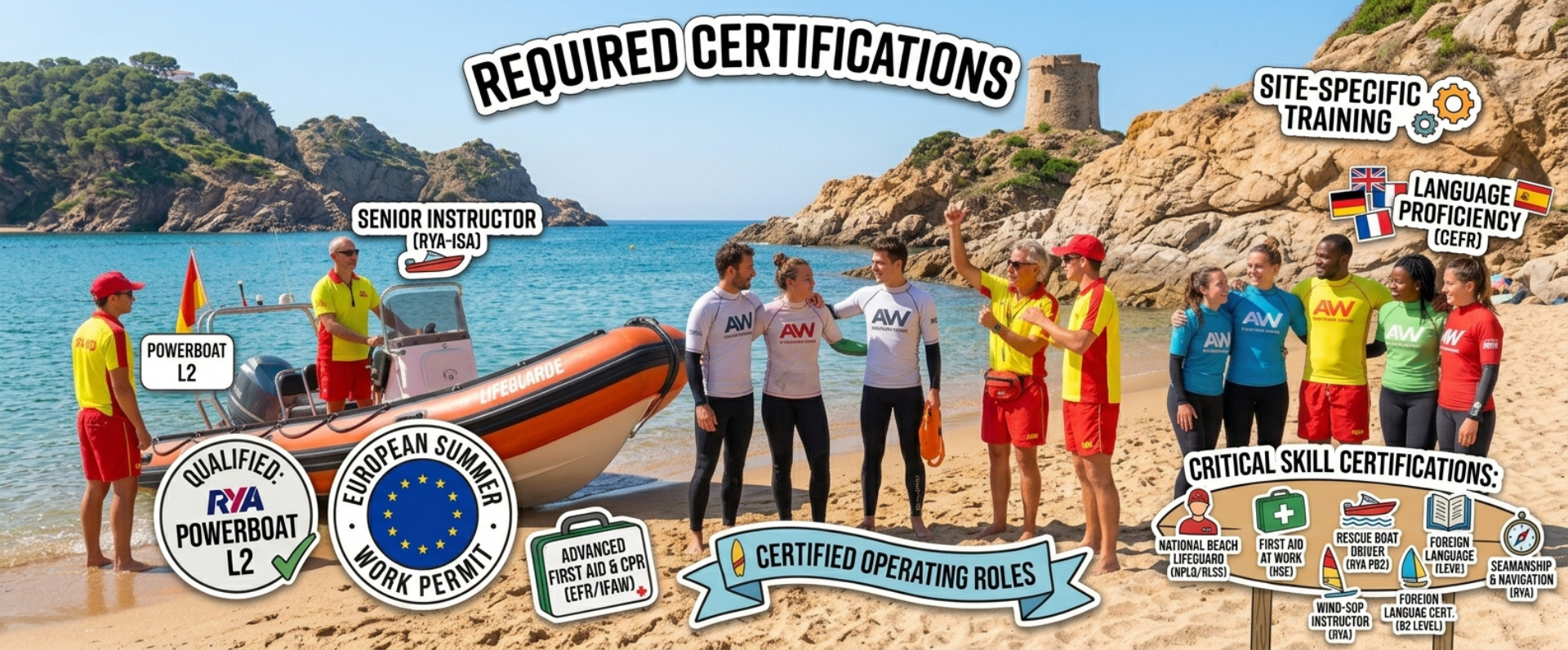
For technical roles such as head surf coach, windsurfing instructor, or commercial boat skipper, holding recognized national or international qualifications is a legal and insurance requirement. Employers cannot place uncertified staff in charge of motorized equipment or advanced ocean instruction.
However, many major resort operators and summer camp programs hire entry-level activity assistants, beach helpers, and waterfront specialists based on personality, athletic enthusiasm, and strong swimming ability. In many cases, large employers provide paid pre-season training weeks where you can complete your safety certificates on-site before the guest season officially begins.
Key Certifications that instantly upgrade your CV:
- First Aid & CPR: An up-to-date Emergency First Aid at Work or Wilderness First Aid certificate is universally respected across every single outdoor job application.
- Lifeguard credentials: ILS (International Life Saving) or National Beach Lifeguard licenses.
- Powerboat licenses: RYA Powerboat Level 2 is one of the most useful extra certifications you can hold, as beach centers constantly need team members who can operate safety rescue boats.
- Language proficiency: While fluent English is the primary language of instruction in international resorts, knowing intermediate conversational French, German, Spanish, or Dutch will put your application right at the top of the recruiter’s stack.
Why HR managers and recruiters love water sports enthusiasts
If you are thinking about your long-term career, you might wonder: Will taking a seasonal summer job look good on my CV in a few years?
The answer is an absolute yes. As a job seeker, it is essential to understand what Human Resources (HR) managers look for when screening seasonal candidates. When recruiters review applications for customer-facing and hospitality roles, they are not just looking at your diploma or degree; they are looking for practical proof of key personal traits.
Here is why HR professionals actively hunt for candidates with water and outdoor instruction experience:
1. Exceptional stress resilience and risk awareness
Operating in an outdoor ocean environment means dealing with changing weather, strong tides, and diverse guest skill levels. Candidates who have successfully managed real-world safety on the water have proven that they do not panic when unexpected challenges arise.
2. High interpersonal intelligence and adaptability
Teaching a child or an anxious adult how to stand on a surfboard or paddle a kayak requires deep empathy, patience, and adaptability. HR managers know that water sports instructors are natural motivators who know how to build instant rapport with guests from diverse cultural backgrounds.
3. Reliability, energy, and teamwork
Running beach operations requires early mornings and constant coordination with fellow crew members. Outdoor workers are used to rolling up their sleeves, helping out across departments, and keeping team morale high even during peak heat or busy afternoons.
When you write your cover letter or update your resume, highlight these transferable soft skills alongside your technical sport abilities.
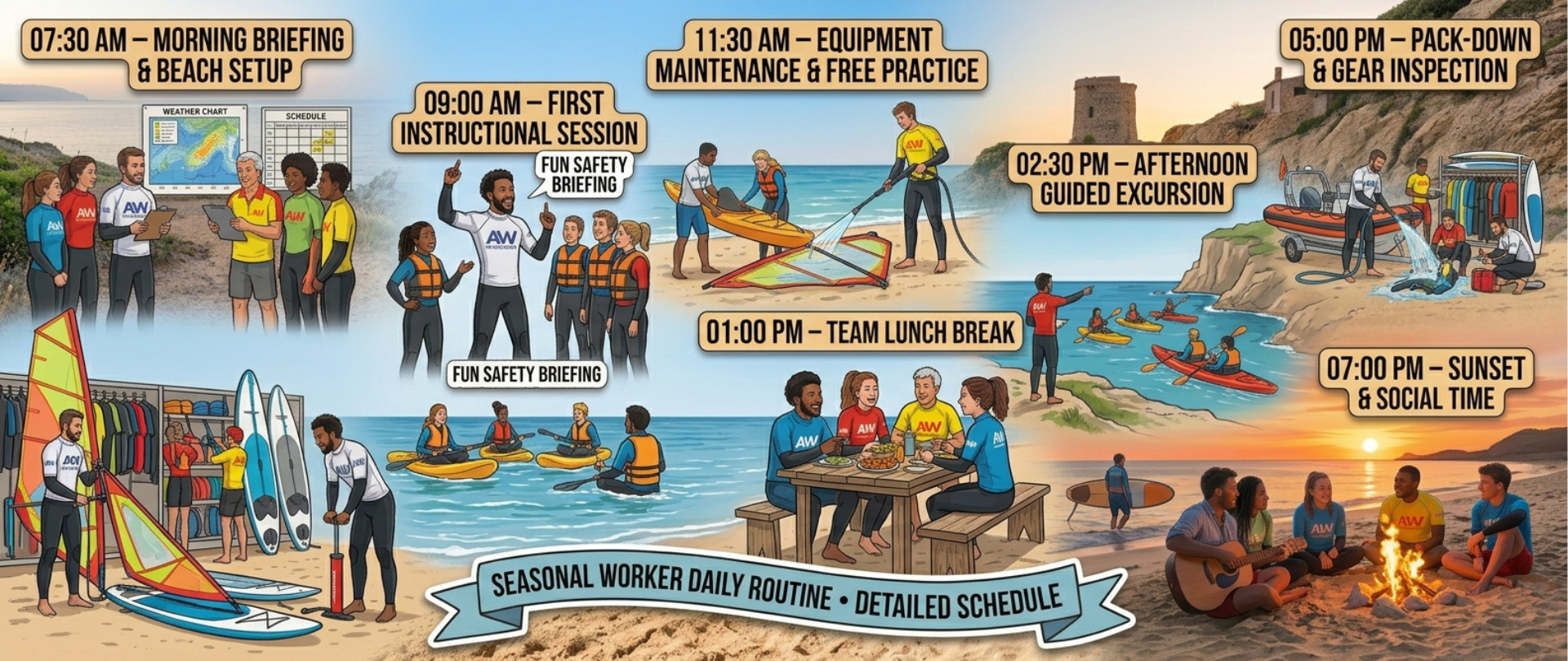
A day in the life of a water sports seasonal worker
To give you a realistic picture of what a summer on the coast actually looks like, let us walk through a typical working day at a European beach resort or activity center.
- 07:30 AM – Morning briefing & beach setup: The morning starts with a crew meeting to review weather forecasts, wind directions, tide charts, and guest booking lists. You head down to the beach, unlock the equipment storage, rig sails, pump up SUP boards, and check safety boats.
- 09:00 AM – First instructional session: You greet your morning group, fit them with proper buoyancy aids and wetsuits, and conduct a fun, energetic safety briefing. You lead the group lesson on the water, offering personalized tips and encouragement.
- 11:30 AM – Equipment maintenance & free practice: Between structured sessions, you perform safety checks on gear, assist experienced guests with launching equipment, and ensure the beach area stays clean and welcoming.
- 01:00 PM – Team lunch break: Enjoying a meal provided by the resort with your co-workers. This is a great time to recharge, chat with fellow staff, and plan evening social activities.
- 02:30 PM – Afternoon guided excursion: You lead a scenic coastal kayak or paddleboard tour along nearby cliffs and coves, pointing out landmarks and taking memorable photos for the guests.
- 05:00 PM – Pack-down & gear inspection: After the final guest sessions end, the whole beach team works together to wash down gear with fresh water, secure boats, store boards, and complete the daily safety log.
- 07:00 PM – Sunset & social time: Your workday is done! You can take a board out for a sunset surf, catch up with friends at a beach cafe, or join resort social events.
How to find and apply for water sports summer jobs in Europe
Finding the right summer job abroad does not have to be overwhelming if you know where to look and how to prepare your application. Follow this strategic step-by-step process to secure your ideal role for the upcoming season.
Step 1: Start your search early (the hiring timeline)
The seasonal hiring cycle starts much earlier than most candidates realize.
- January – March: Major international beach clubs, holiday resorts, and summer camps post their primary job vacancies and conduct online interviews.
- April – May: Late-stage recruiting, contract confirmations, visa processing (if required), and pre-season training scheduling.
- June – September: The core summer operating season across Mediterranean and European coastal destinations.
Applying early in the year gives you access to the widest selection of destinations and allows you to secure positions that include staff accommodation.
Step 2: Optimize your CV for outdoor and seasonal roles
When applying for seasonal jobs through specialized job boards, keep your CV clean, clear, and focused on practical achievements.
- Include a dedicated certifications header: List your First Aid, Lifeguard, Driving, and Sport Instructor credentials right at the top of your resume where recruiters can instantly spot them.
- Highlight language abilities: Clearly state your native language and your level of spoken English, along with any other European languages you can speak in customer service situations.
- Focus on customer-facing experience: Even if your past work was working in retail, hospitality, or volunteering, emphasize how you handled customer communication, safety, and teamwork.
Step 3: Use specialized job platforms
Instead of scrolling through generic local job sites, focus your search on platforms built specifically for overseas seasonal work and language-speaking talent.
Explore open listings on dedicated job search portals like AnyworkAnywhere to find beach resort jobs, summer camp waterfront roles, and outdoor activity positions across Europe and worldwide.
Key questions to ask recruiters during your interview
When you land an interview for a summer job abroad, remember that the interview is a two-way street. You want to make sure the job fits your personal goals and financial expectations. Here are smart, professional questions to ask the hiring manager:
- Is staff accommodation included or provided nearby? Ask whether accommodation is located on-site or off-site, what the living arrangements look like (shared or private rooms), and whether utility bills are included.
- Are meals provided on duty or throughout the week? Understanding your meal package helps you calculate how much of your paycheck you will be able to save each month.
- What equipment access do staff members have during free time? Many high-quality watersports centers allow employees to use surfboards, SUPs, and sailing dinghies for free during off-hours, which is a massive bonus for sports enthusiasts.
- Is travel to and from the resort reimbursed? Some major resort operators offer travel allowances or return flights upon successful completion of your contract.
- What pre-season training or qualifications are provided on site? Inquire if the company provides internal safety refresher courses or official qualification upgrades before the guest season begins.

Ready to turn your passion for the ocean into your next career step?
Working a summer job in water sports is far more than just a temporary gig. It is an unforgettable life experience that builds self-confidence, introduces you to lifelong friends from around the world, and provides you with real-world leadership skills that stand out on any future job application.
Whether you choose to guide kayakers through crystal-clear Mediterranean bays, coach eager beginner surfers on the Atlantic coast, or keep swimmers safe as a beach lifeguard, the opportunities are waiting for you right now.
Do not wait until the summer sun arrives to start planning. Take the first step today: update your CV, highlight your sports and language skills, and start exploring the latest seasonal opportunities.
Take the next step in your job search!
Check out specialized beach, resort, and summer camp openings on AnyworkAnywhere to secure your spot by the sea this season!