


If you are currently wondering how to make your summer count without spending another three months working at your local supermarket, you are not alone.
Every spring, thousands of university students face the exact same dilemma. You want to travel, experience living in another country, and earn money. At the same time, you feel the pressure to build your CV, gain professional experience, and make progress toward your university degree.
What if you did not have to choose between traveling and advancing your career?
The short answer is yes. You can often get university credits for working abroad during the summer, and even when you cannot get formal academic credits, the real-world experience you gain is something HR recruiters actively look for on a graduate resume.
As someone who is currently balancing university requirements with building a career, I know how confusing academic bureaucracy can be. In this guide, we will break down step-by-step how to turn a summer job abroad into academic credit, how to frame your experience so hiring managers take notice and how to find summer roles that set you up for long-term career success.

Can working abroad count as University credit?
The short answer is yes, but it depends on how your university structures its credit system and how proactive you are before you leave.
Most universities in Europe use the ECTS (European Credit Transfer and Accumulation System) framework, while institutions in North America and other regions use credit hours. In almost all academic systems, there is flexibility for practical learning, internships, or work placements.
However, universities rarely hand out credits automatically just because you worked in a resort in Spain or a summer camp in Greece. You have to create the link between your daily work duties and your academic field of study.
How University credits for work placements actually work
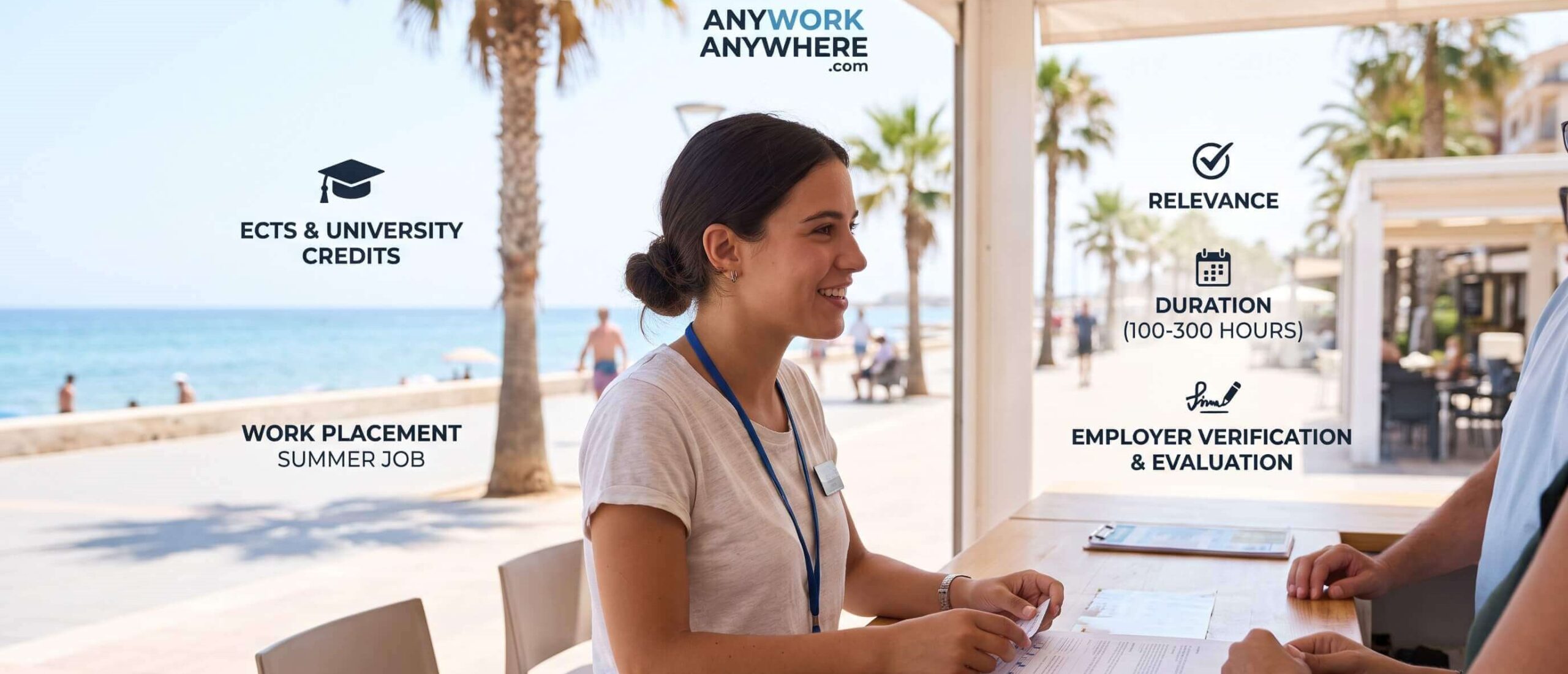
Universities evaluate work experience based on learning outcomes rather than job titles. To grant credits for a summer job, your department coordinator usually needs to verify three things:
- Relevance: The tasks you perform must connect to skills related to your degree program or general soft skills like communication, project management, or languages.
- Duration: You must work a minimum number of hours over the summer (usually between 100 and 300 hours depending on how many credits you need).
- Verification: An employer must confirm your employment dates and evaluate your performance, and you must submit a brief report or portfolio of your work.
If your summer job meets these three conditions, it can often be approved as an elective module, an independent study credit, or a mandatory practical internship.
Step-by-step: How to get your summer job approved for college credits
If you want your summer job to count toward your degree, the most important rule is simple: get approval before you sign your contract or board your flight. Trying to claim credits retroactively after the summer is over is much harder and often results in rejection.
Here is the exact process to follow with your university administration.
Step 1: Identify your University’s credit requirements
Start by checking your degree handbook or speaking with your department’s academic advisor. Look for courses or modules labeled:
- Practical placement / Internship module
- Independent work study
- Experiential learning
- Fieldwork or industry experience
Note down the required number of working hours, the type of assessment required (such as a reflective diary or final presentation) and the deadline for submitting your proposal.
Step 2: Pitch the role to your academic advisor
Once you find a summer position on AnyworkAnywhere, whether it is a guest relations role at a European resort, a team lead at an international summer camp or an administrative position in hospitality, you need to present it to your department coordinator.
Do not just send them a link to the job post. Prepare a brief, professional email explaining how the job relates to your studies.
For example, if you study Business or Communication and you are applying for a customer service or reception role abroad, highlight the following:
- You will be managing multi-lingual client communications daily.
- You will be handling operational logistics and problem-solving under pressure.
- You will be working in a cross-cultural team environment.
Framing the job in terms of professional competencies makes it much easier for an academic advisor to sign off on the credits.
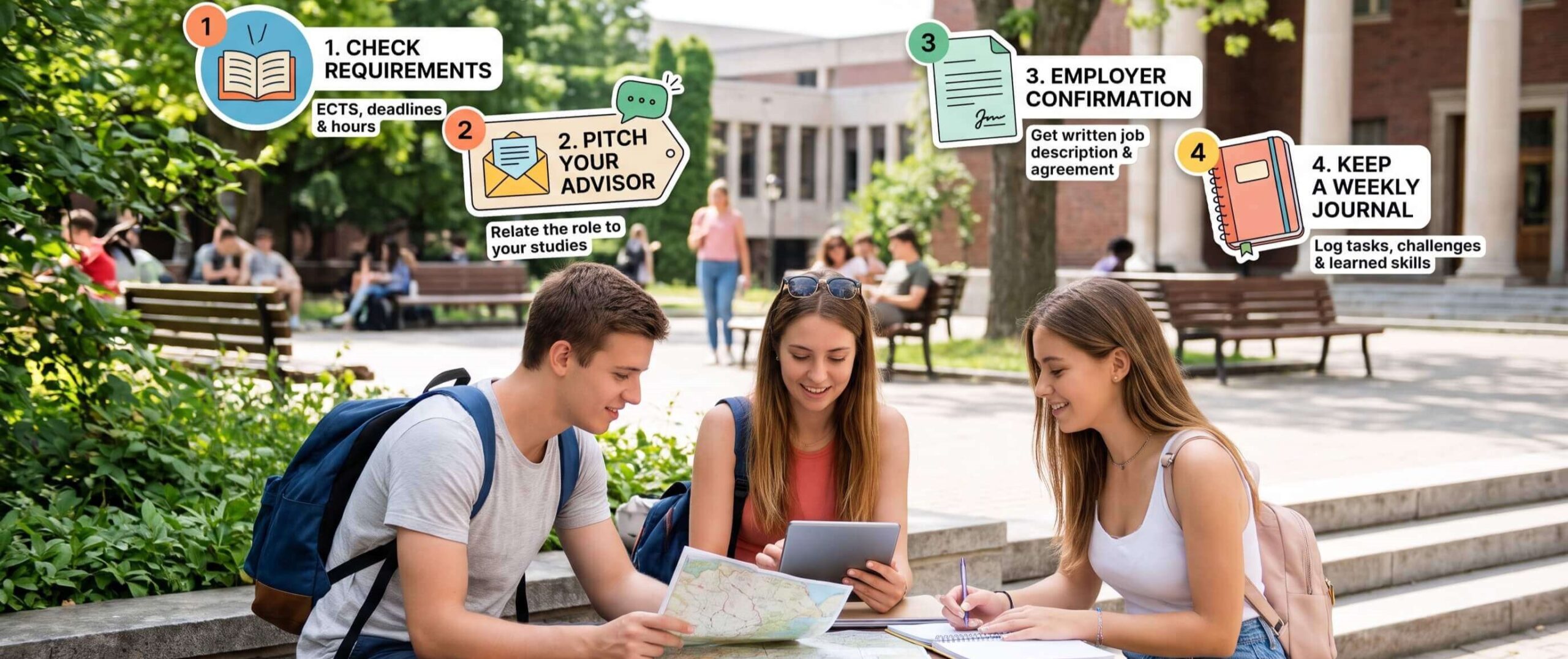
Step 3: Get written confirmation from your employer
Before your summer starts, ask your employer for a basic training agreement or job description letter. Most employers who hire seasonal staff through AnyworkAnywhere are accustomed to hosting international students and are happy to sign standard university paperwork confirming your duties, working hours, and start date.
Step 4: Keep a work journal during the summer
To secure your credits at the end of the season, you will likely need to submit a short report. Keep a weekly journal while working abroad. Write down:
- Key tasks you completed and new skills you learned.
- Specific challenges you faced and how you solved them.
- Examples of cross-cultural communication or teamwork.
Having these notes ready makes writing your final university report effortless when you return to campus in autumn.
What if your University will not grant academic credits?
Sometimes, academic red tape gets in the way. Your university might have rigid rules that only allow internships at specific pre-approved local companies, or your degree path might not leave room for elective credits.
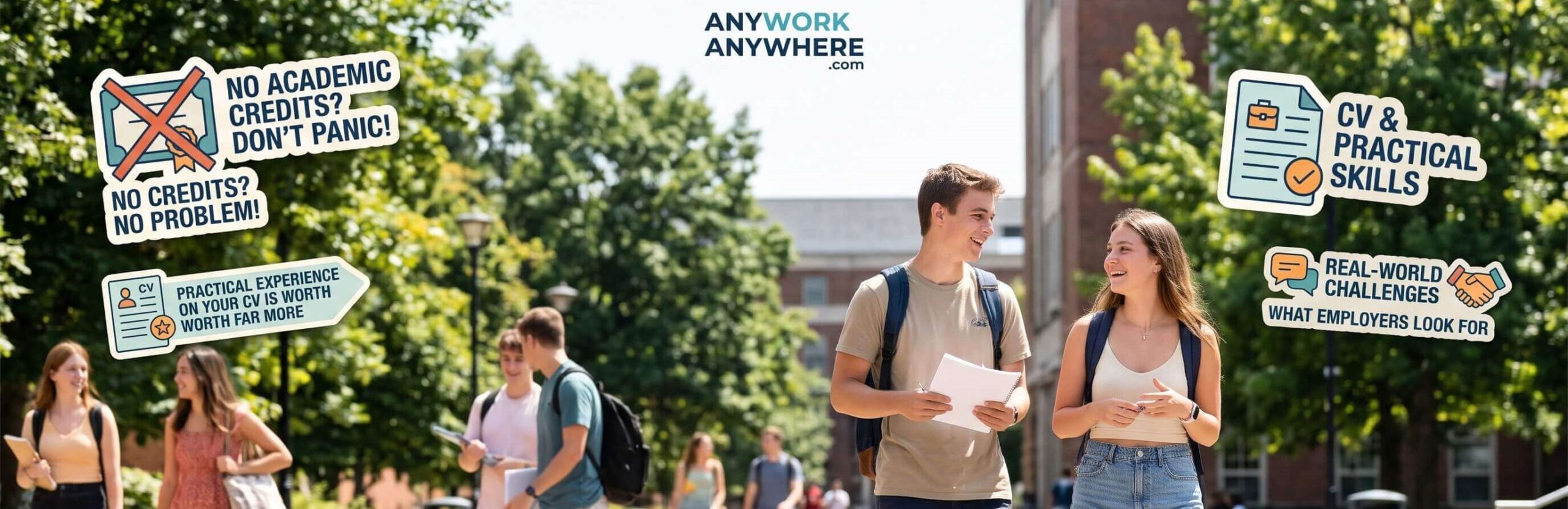
If that happens, do not worry. Missing out on formal academic credits does not mean your summer job is a waste of time. In fact, from an HR perspective, the practical experience on your CV is often worth far more than three elective credits on a transcript.
Employers rarely ask to see your university transcript details during job interviews. What they do look at is your CV, your practical skills, and your ability to talk about real-world challenges.
Why HR recruiters love candidates who have worked abroad
When HR managers and internal recruiters review hundreds of entry-level graduate applications, standard CVs quickly start to blend together. Almost every graduate has good grades and a standard university degree.
What recruiters actually look for are indicators of independence, adaptability, and real-world problem-solving. Working abroad during your summer break signals all three immediately.
Here is why seasonal work abroad makes your CV stand out to hiring managers:
1. Proof of adaptability and resilience
Moving to a new country for a summer job requires stepping outside your comfort zone. It shows employers that you can adapt to new environments, navigate unfamiliar situations, and handle change without hand-holding. In a modern workplace, adaptability is one of the top soft skills recruiters seek.
2. High-level interpersonal and cross-cultural communication
Whether you are working in hospitality, childcare, customer service, or event management abroad, you spend your summer interacting with colleagues and customers from diverse cultural and linguistic backgrounds. Recruiters recognize that candidates with international experience are naturally better at teamwork, conflict resolution, and clear communication.

3. Problem-solving under pressure
Seasonal summer roles move fast. You learn how to handle busy operational days, resolve guest complaints, manage logistics, and make quick decisions. When an interviewer asks, “Tell me about a time you handled a difficult situation under pressure,” you will have genuine, memorable stories from your summer abroad rather than generic classroom examples.
4. Language capability and cultural awareness
Even if your summer role is conducted primarily in English, living in another country builds functional language awareness and intercultural competence. For global companies or businesses with international clients, having staff who feel comfortable in multi-language environments is a major asset.
How to format your summer job abroad on your CV
To make sure HR recruiters notice your international experience, you need to frame your summer job professionally. Avoid listing it as just a “summer trip” or using vague descriptions like “helped out at a hotel.”
Use action verbs, highlight specific responsibilities, and quantify your achievements where possible.
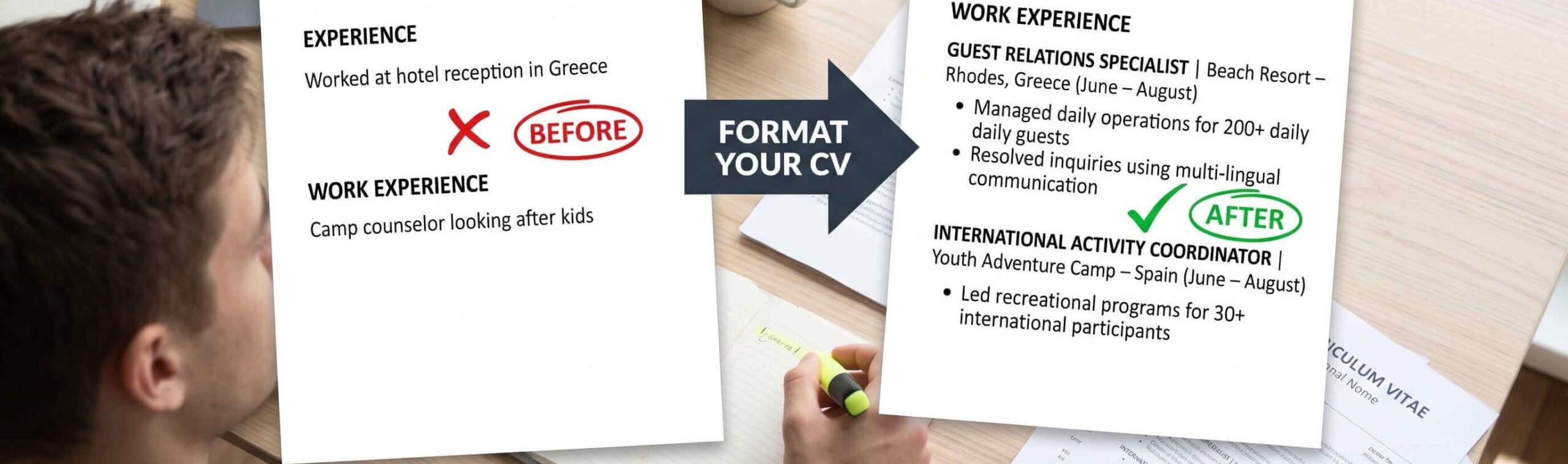
Example 1: Hospitality and Guest Relations Role
Instead of writing:
- Worked at hotel reception in Greece for the summer.
Write:
- Guest Relations & Front Office Specialist | Beach Resort – Rhodes, Greece (June 2025 – August 2025)
- Managed daily check-in and reception operations for an international clientele of over 200 daily guests in a fast-paced environment.
- Resolved guest inquiries and operational challenges using English and conversational Spanish, maintaining a 95%+ positive feedback rating.
- Coordinated with housekeeping and management teams to streamline daily guest logistics.
Example 2: Activity Leader or Summer Camp Role
Instead of writing:
- Camp counselor looking after kids.
Write:
- International Activity Coordinator | Youth Adventure Camp – Spain (June 2025 – August 2025)
- Led daily educational and recreational programs for groups of up to 30 international participants, ensuring strict safety and engagement standards.
- Facilitated cross-cultural team activities, promoting inclusion and teamwork among youth from over 10 countries.
- Managed daily schedules, emergency procedures, and parent communication with high attention to detail.
Best types of summer jobs abroad for University students
If you want a summer experience that balances earning money, traveling, and building strong CV experience, certain seasonal sectors stand out.

Hospitality and Resort Roles
Working in hotels, resorts, or customer-facing roles across Europe and beyond offers immediate exposure to fast-paced business operations. These roles frequently include accommodation and meals, making it easy to manage your finances while living abroad.
Explore open positions in hospitality and customer service on the AnyworkAnywhere Hospitality Jobs board to find roles starting this summer.
Summer Camp and Youth Activity Leadership
If you study education, sports science, psychology, or management, working at an international camp or activity center provides direct leadership experience. You gain measurable experience in group management, safety protocols, and event coordination.
Check out opportunities on the AnyworkAnywhere Childcare & Camp Jobs page for verified listings worldwide.
Tour Guiding and Event Management
For students interested in marketing, communications, or tourism, seasonal event and tour roles build strong public speaking, crowd management, and logistics skills.
Browse active vacancies across popular summer destinations on the main AnyworkAnywhere Job Search platform.
Everything you need to know about summer work abroad
Can I get ECTS credits for a paid summer job abroad?
Yes. Under the ECTS framework, whether a work placement is paid or unpaid does not impact its academic validity. As long as the work outcomes meet your university’s learning criteria and your employer verifies your hours, paid seasonal positions can qualify for credits.
When should I start applying for summer jobs abroad?
The ideal time to apply for summer positions is between January and April. Top seasonal employers finalize their staffing early to arrange accommodation and logistics. However, late positions and last-minute vacancies often open up in May and June.
Do I need to speak the local language to work abroad in the summer?
Not necessarily. Many international resorts, tour companies, and camps operate primarily in English. Having basic knowledge of the local language is a plus, but strong English communication skills and a willingness to learn are often all that is required for entry-level seasonal roles.

Make your next summer count!
You do not have to put your career on pause to experience living and working abroad. By planning ahead with your university advisor and choosing a summer position that builds practical skills, you can return to campus in autumn with university credits, money in your bank account, and a CV that gets noticed by recruiters.
Ready to start planning your summer? Explore thousands of seasonal jobs, internships and work placements around the globe on AnyworkAnywhere today.