
Anywork Anywhere resources
How to successfully hire seasonal workers without a hospitality recruitment agency?

Hospitality employment agencies are a popular solution in seasonal recruiting. They take care of the whole process: sourcing candidates, screening, interviewing and hiring – making all the decisions for the interested employer. However, they tend to be very costly and employers do not have very little impact on who they’re going to talk with and who is actually going to join their teams.
The staff you hire for your business, whether you own a big resort, small hotel, a ski instructor facility or a restaurant, is the backbone of your success.
The front desk staff who greets your customers with a warm smile, the room service that leaves the rooms spotless, the animators and instructors who organise your guests’ time and make sure they use it to the fullest, the cab drivers who make sure your guests are safe during trips and even maintenance staff that resolves issues before the guests even notice them. All of their hard everyday work contributes to the success of your firm.
There is one aspect of running a hospitality business that is often forgotten – friendliness and interpersonal relations, not only towards the customers, but most importantly among the members of the crew.
Your guests will more than certainly be able to see whether your employees truly enjoy working together, have friendly relationships and can resolve conflict and work under pressure together. The friendlier the staff, the better experience your guests will have. That’s why it is crucial to see the bigger picture and be able to choose the personnel (and their personalities) wisely before they start to spend 8+ hours per day with you.
The conclusion is simple – it is for your best interest that you and your most trusted coworkers are involved in the recruitment process. Even if at first recruitment may seem complicated, we believe that with proper guidance it is a process you can handle yourself and in this article we’re going to show you how.
What are the best platforms to find qualified candidates for seasonal jobs in Europe?
You’ve probably been asking yourself ‘where can I post job ads to attract seasonal workers?’. We’re here to answer that question.
The first thing you need to consider is whether your business can rely on a limited pool of local candidates or whether you should broaden your search to include applicants from a wider area, or even source seasonal workers internationally.
If you’re planning to recruit internationally, ask yourself whether you can provide accommodation and meals or if that isn’t an option. You should also consider whether your employees need to speak English or other languages fluently, or whether the local language is sufficient for the role.
The answers to these questions will help determine whether local job boards are enough or if you should use international job boards that specialise in connecting hospitality businesses with seasonal workers.
How to use job boards to hire hospitality employees quickly?
The first step is finding the right job board. AnyworkAnywhere specializes in sourcing candidates both locally and internationally. It’s a great option if you’ve exhausted your local talent pool and need access to a wider range of candidates who are willing to relocate quickly to start working with you.
This is particularly beneficial for boutique hotels, resorts, and other businesses in the tourism industry located in remote areas, such as small islands or mountain villages. Most candidates using our platform already speak English, allowing them to communicate effectively with your international guests and colleagues. This is valuable not only for hospitality businesses that already operate internationally, but also for local businesses looking to expand into the international market. Hiring multilingual staff from the start can help your business grow faster and more smoothly, without the need to recruit additional employees halfway through your expansion.
The best online platforms for temporary hiring guide employers through every stage of the recruitment process. They provide advice on writing compelling job ads, help you organize applications, send applicant information directly to your inbox if needed, allow you to track each candidate’s progress, and make it easy to schedule interviews.
If you’ve been worried about not having enough recruitment experience and have found yourself asking Google, “Where can I find specialized training programs for hotel HR managers?”, we have good news. Leading platforms for posting short-term hospitality job openings in Europe, such as AnyworkAnywhere, also provide professional HR support through informative blogs, industry reports, and personalized guidance from Account Managers. We can help you develop a hiring strategy tailored to your business and ensure you reach your recruitment goals on time.
These professionals often bring cultural understanding, adaptability, problem-solving abilities, and communication skills that are essential in international business environments.
A multilingual employee can help companies:
- Improve customer satisfaction across different markets
- Increase international sales and client retention
- Strengthen global brand reputation
- Facilitate smoother collaboration between international teams
- Expand more efficiently into new countries and regions
As a result, multilingual candidates are increasingly viewed as long-term strategic assets rather than merely operational staff.
You’ve probably been asking yourself ‘where can I post job ads to attract seasonal workers?’. We’re here to answer that question.
The first thing you need to consider is whether your business can rely on a limited pool of local candidates or whether you should broaden your search to include applicants from a wider area, or even source seasonal workers internationally.
If you’re planning to recruit internationally, ask yourself whether you can provide accommodation and meals or if that isn’t an option. You should also consider whether your employees need to speak English or other languages fluently, or whether the local language is sufficient for the role.
The answers to these questions will help determine whether local job boards are enough or if you should use international job boards that specialise in connecting hospitality businesses with seasonal workers.
What are some best ways to attract skilled talent for hotel jobs?
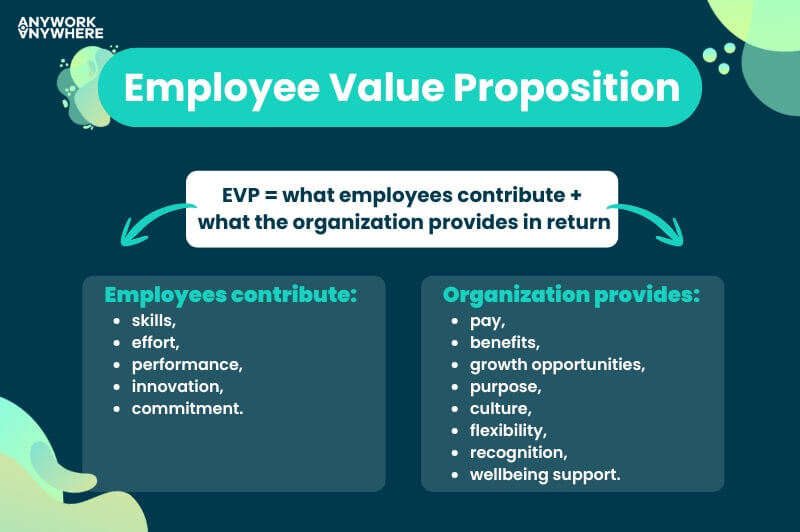
To attract skilled talent for hotel jobs, you first need to define your Employee Value Proposition (EVP). What exactly is an Employee Value Proposition?
An Employee Value Proposition describes the value exchange between an organization and its employees. It includes tangible rewards, such as compensation and benefits, as well as intangible factors, including career development opportunities, workplace culture, and recognition. Together, these are the benefits employees receive in return for their skills, performance, and contributions.
Our own experience, supported by industry research, shows that job ads with a clear and transparent EVP receive up to 50% more exposure during the recruitment process. They also tend to attract more engaged employees, leading to higher retention rates and making it easier for employers to build a stable, committed workforce.
It’s important to remember that every company can create a unique Employee Value Proposition. Independent hotels can compete just as effectively as large hotel chains for top hospitality talent by clearly and transparently communicating what makes them a great place to work.
How to come up with your own Employee Value Proposition?
Research should always be your first step. Start by looking at how other hospitality businesses in your area present themselves. Review their job ads, take note of the benefits and perks they offer, read employee reviews online, and identify what works well and what you’d like to avoid in your own recruitment strategy.
Useful tip: Your Employee Value Proposition (EVP) is the balance between what employees contribute and what your organization offers in return.
The strongest Employee Value Propositions are authentic (they reflect the real employee experience), distinctive (they set your business apart from competitors), and consistent (they are delivered throughout the entire employee lifecycle).
What are some common benefits offered in the hospitality industry?
Every hospitality business offers a unique combination of employee benefits and perks. The package often depends on whether the business is part of a global hotel chain, a franchise, or an independent property such as a boutique hotel.
Independent hotels can be just as attractive to candidates as large hotel chains. It all comes down to how the opportunity is presented.
Different people value different things. Flexible working hours and changing shifts may appeal to candidates who want to explore the local area or have family commitments. On the other hand, a fixed schedule can be a great option for someone who values routine and stability – it makes it easier to plan their daily life, childcare, studies, or travel.
The type of hotel can also appeal to different candidates. Large hotel brands often offer structured training, opportunities to work with multiple people from different backgrounds, and experience in a well-established company. They may also provide more opportunities for career progression or transfers to other locations.
Independent and boutique hotels have their own strengths. Teams are often smaller, which means employees may build closer relationships with their colleagues and managers. Staff may also have the chance to learn a wider range of skills because they are involved in different aspects of the hotel’s day-to-day operations.
When speaking to candidates, take the time to understand what is important to them. Once you know what matters most to them, focus on the parts of the job that match their interests. This helps candidates see how the role fits their needs and makes the opportunity more attractive.
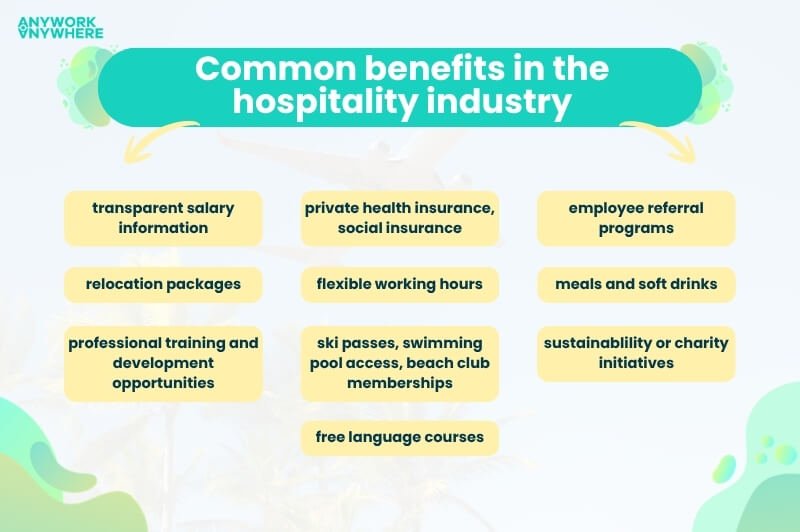
Some of the most commonly offered benefits include:
- transparent salary information, with a specific pay rate or salary range clearly stated in the job ad;
- flexible working hours, including different shift patterns that support a healthy work-life balance – flexible scheduling makes hospitality roles more attractive to students, parents, and part-time employees;
- meals and soft drinks provided during working hours of the facility;
- relocation packages, including flights to and from the destination, accommodation, or relocation assistance; or subsidized accommodation, allowing employees to pay significantly below market rates.
- private health insurance, social insurance;
- free language courses to help employees develop new skills and immerse in the local culture,
- professional training and development opportunities;
- employee perks, such as complimentary or discounted ski passes, swimming pool access, or beach club memberships;
- opportunities to participate in sustainability initiatives or charitable projects, helping employees feel connected to a meaningful purpose;
- employee referral programs, rewarding staff for recommending successful candidates.
The right combination of benefits can significantly strengthen your Employee Value Proposition and help your business stand out in a competitive hospitality job market.
What are Employee Referral Programs and how to successfully implement them in hospitality businesses?
An employee referral program encourages your current employees to recommend friends, former colleagues, or people from their professional network for open positions. When a referred candidate is successfully hired and meets predefined milestones, such as completing their probation period, the employee who made the referral receives a reward, usually monetary.
To get the best results from an employee referral program, hotels should introduce a clear and transparent reward structure. Our recommendation is to divide the process into four steps:
- An existing employee refers someone for an open position.
- The referred candidate successfully completes the recruitment process and is hired.
- After 30 days of work, the employee who made the referral receives 50% of the agreed referral bonus.
- After 90 days of employment, the remaining 50% of the bonus is paid to the employee who made the referral.
Splitting the referral bonus into two payments encourages employees to recommend candidates who are genuinely interested in staying with the company. As a result, hotels benefit from higher employee retention, lower recruitment and onboarding costs, and a stronger, more engaged team.
Candidates with experience in retail, restaurants, or customer support often have friends from the industry with the people skills needed to succeed in hospitality.
How to write hospitality job ads?
Once you’ve defined your Employee Value Proposition (EVP), it’s time to write an effective job ad.
A successful job ad has two main objectives. First, it should present your business in the best possible light and convince candidates that it’s a great place to work. It’s your opportunity to introduce your business, brand, and team to potential employees while showcasing what makes your workplace unique.
Second, it should clearly explain what the role involves and what you’ll expect from the successful candidate. Include the day-to-day responsibilities and all the benefits and perks your business offers. The more transparent and informative your job ad is, the more likely you are to attract candidates who are genuinely interested in the role and a good fit for your business. This, in turn, makes the later stages of the recruitment process much easier by reducing the number of unsuitable applications and helping you identify the right candidates more quickly.
Remember that your job ad is often the first impression potential employees have of your business. Just as you expect candidates to present themselves professionally, job seekers expect the same from employers. A clear, well-structured job ad shows that your business is organised, transparent, and a great place to work.
Guidelines for writing hospitality job ads
The best hospitality job ads are simple, informative, and easy to read. Avoid long paragraphs and unnecessary jargon. Instead, use clear headings and bullet points to help candidates quickly find the information they’re looking for. The easier your job ad is to scan, the more likely people are to read it from start to finish.
Start with a clear and searchable job title that accurately describes the position. Mention if the role is seasonal, part-time, or full-time, and include the location if it’s relevant. Then introduce your business by explaining who you are, what makes your hotel, resort, or restaurant unique, and what candidates can expect from working with your team. This is the perfect place to highlight your company culture, values, and mission if you have them defined.
Next, describe the role in detail. Explain the day-to-day responsibilities, the level of customer service you expect, and what success in the position looks like. Be realistic about the job requirements and separate essential qualifications from those that are simply desirable and teachable. Long lists of unnecessary requirements can discourage qualified candidates from applying, especially those changing careers or entering the hospitality industry for the first time. Keep it simple and concise.
We will repeat ourselves here but be as transparent as possible about the financial offer and employee benefits. Include the salary or salary range whenever possible, working hours or shift patterns, contract type, and any additional perks such as accommodation, meals, relocation support, health insurance, language courses, or training opportunities. Candidates are far more likely to apply when they know exactly what they’re getting.
Finally, make the application process simple. Explain how to apply, what documents candidates should submit, what the recruitment process looks like, when they can expect to hear back from you and what is the starting date. Clear communication builds trust from the very beginning and creates a positive candidate experience, even before the first interview.
What qualities should you look for in hotel staff when reviewing applications?
Previous experience is valuable, but it’s not the only factor that determines whether someone will thrive in hospitality. As businesses in the industry continue to introduce self-service check-in, mobile apps and digital room keys, employees have more time to focus on what technology can’t replace – making guests feel welcome and taken care of.
Today’s guests expect more than a clean room and tasty food – they truly value little interactions and personal touches. That is why it’s extremely important to focus on the personal qualities and personality traits of the candidates.
Some of the most important qualities to look for include:
- customer service skills: a desire to help guests & anticipate their needs, being able to manage big emotions (like stress and anger) and working under pressure are a must;
- strong communication: the ability to communicate clearly and professionally with guests, colleagues, and managers (you can test this during the job interview);
- attention to detail: following procedures carefully, maintaining high service standards, and noticing the small details that improve the guest experience;
- a positive attitude: remaining friendly and approachable, even during busy periods or challenging situations;
- time management: working efficiently under pressure, and meeting service expectations throughout the shift.
What are effective interview techniques for hiring hotel staff?
After you review the CVs, it’s time to meet some of the candidates. If you haven’t done many interviews before, it’s completely normal to feel a bit nervous. Remember, an interview is simply a conversation where you get to know another person and see if they could be a good fit for the role and the team.
Before the interview, take a few minutes to prepare. Think about what you want to learn from the candidate – not only about their experience and skills, but also about how they think, solve problems, communicate, and handle different situations.
Start with a friendly introduction and some small talk. Ask the candidate how they are, introduce yourself, and help them feel comfortable. A relaxed conversation will help the candidate show their real personality and make the interview feel more natural.
Keep the candidate’s CV in front of you during the interview. It can help you ask more specific questions about their past experience, skills they have developed, reasons for changing jobs, and what they learned from previous roles.
Try to ask a variety of questions. Talk about their experience, how they work with customers, how they cooperate with others, and what motivates them. The goal is to understand who they are, how they work, and how they could contribute to the team.
Here are some examples of questions that you can ask:
Background and experience
- What attracted you to apply for this job?
- What hospitality or customer service experience do you have?
- Tell me about a task that was new for you and you had to learn quickly & how did you approach it?
- Tell me about your experience working in the hospitality industry.
Customer service
- What does great customer service mean to you?
- What’s the best customer service you’ve ever received?
- Tell me about a time you successfully handled a difficult customer. What strategies did you use?
- If a guest asked you for local recommendations, how would you decide what to suggest?
Teamwork and problem-solving
- Describe a time you worked closely with colleagues from different departments. How was it?
- Tell me about a disagreement with a coworker. How did you resolve it?
- Have you ever helped a colleague who was struggling? What did you do?
- How would you react if an emergency occurred during your shift?
- How do you organise your time and your tasks? Do you have any structure you follow?
Motivation and cultural fit
- What interests you about working at our hotel?
- What do you think makes excellent hospitality different from good hospitality?
- How do you stay positive when work becomes stressful?
- What is your impression of our hotel so far? What stands out to you?
The answers to those questions should give you a good picture of the candidate, their experience, working style and personality. After interviewing a bunch of applicants you should be able to decide which one you like best and send them an offer. It’s crucial to give feedback to candidates who you’re not moving forward with as well – it’s a sign of respect and trust and keeping the door open for future possibilities.
When you send a job offer to a hospitality candidate, make sure to include all the important details they need to know. This should include information about the working conditions, required documents, the contract, and any relocation support if they need to move for the job.
Always provide a contact person’s email address and phone number so the candidate knows who to reach out to if they have any questions or need more information.
Congratulations! You’ve just hired a seasonal worker without a hospitality recruitment agency!
AnyworkAnywhere offers the largest selection of summer, winter and permanent jobs abroad thanks to partnering with leading brands across multiple industries. We believe great opportunities deserve to be seen – by both candidates and the employers who need them. Let us connect you with your next employee.
If you’re looking to hire, we’d love to hear from you: alberto@anyworkanywhere.com