
Anywork Anywhere resources
Competition is increasing
Why You’re Losing Multilingual Candidates to Other Employers

(And You Don’t Even Know It) Strategic Recruitment Report for International Hiring in Europe – 2026
The competition for multilingual talent in Europe has reached a boiling point. Companies across hospitality, tourism, customer support, BPO, tech, and sales are all fighting for the same pool of international candidates — especially Dutch, German, French, Nordic, and Polish speakers.
Yet many employers believe their biggest challenge is “not getting enough applicants”. The reality is different : most companies are already attracting multilingual candidates… but silently losing them during the recruitment process.
The 2026 Reality Check: According to global talent benchmarks, up to 60% of job seekers quit mid-way through an online application purely due to its length or complexity. In 2026, candidates move faster, compare offers instantly, and expect significantly more from employers. This report explores the hidden reasons you are losing multilingual talent to competitors — and what you can do immediately to fix it.
1. Multilingual candidates have more choices than ever
Today’s multilingual professionals are among the most in-demand workers in Europe.
The Power Shift: Data shows that highly skilled multilingual profiles (especially German, Dutch, French, and Nordic speakers) receive an average of 3 to 4 competing job offers simultaneously within a two-week period.
Global Competition: In sectors like customer support, tourism, and tech, you are no longer competing only with the business down the street. You are competing globally against remote-first opportunities and aggressive relocation packages from international brands.
For organizations, hiring multilingual employees is no longer just about language support.
These professionals often bring cultural understanding, adaptability, problem-solving abilities, and communication skills that are essential in international business environments.
A multilingual employee can help companies:
- Improve customer satisfaction across different markets
- Increase international sales and client retention
- Strengthen global brand reputation
- Facilitate smoother collaboration between international teams
- Expand more efficiently into new countries and regions
As a result, multilingual candidates are increasingly viewed as long-term strategic assets rather than merely operational staff.
2. The biggest problem: companies think salary is everything
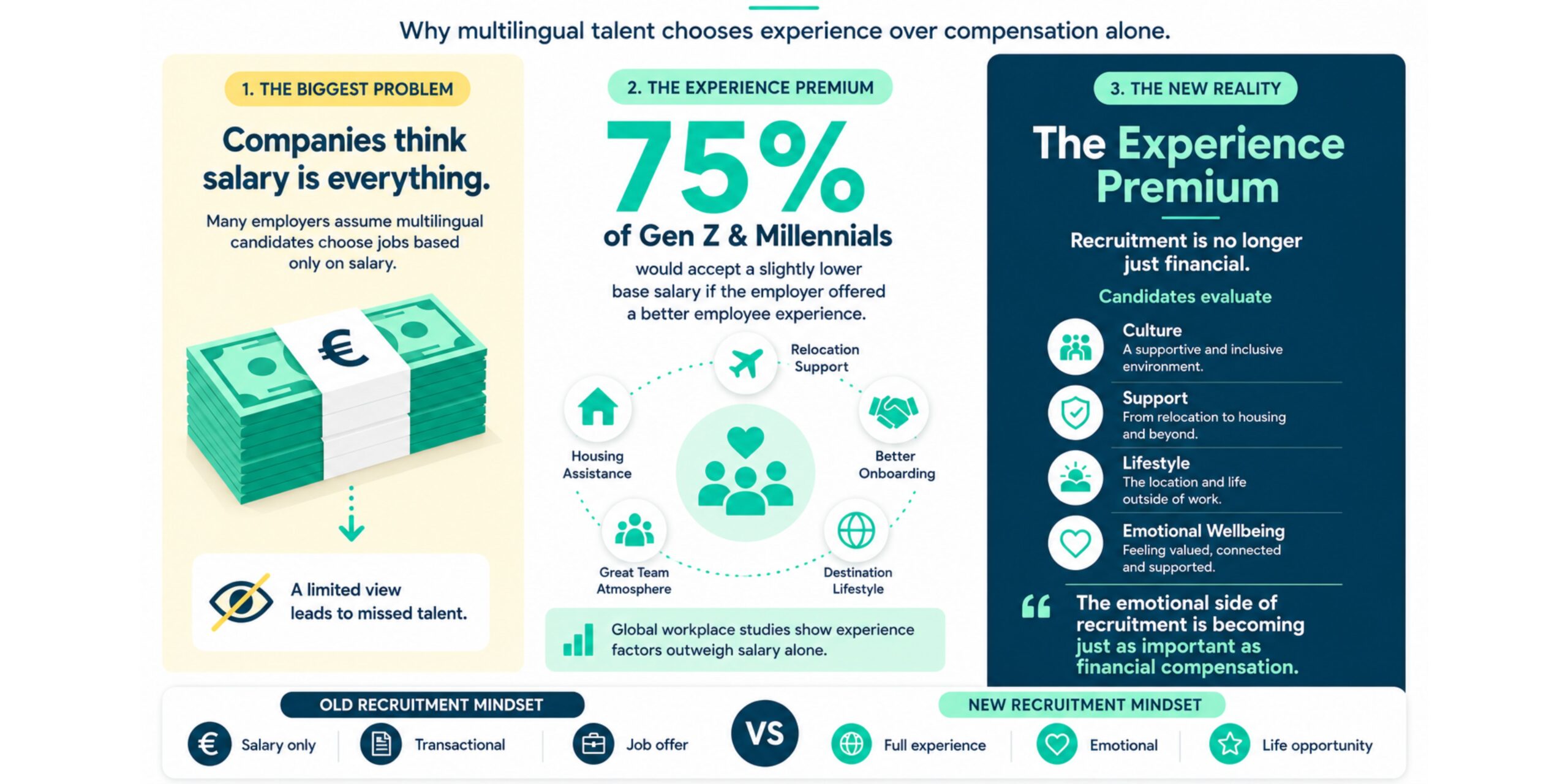
The Biggest Recruitment Mistake
For years, companies believed that salary was the main factor driving recruitment decisions.
Higher pay meant better talent.
But today’s workforce — especially multilingual Gen Z and Millennial professionals — is changing the rules completely.
Candidates are no longer evaluating only a paycheck.
They are evaluating an entire life experience.
They ask questions like:
- Will the company help me relocate?
- Can I find stable housing easily?
- Will I feel supported during onboarding?
- What is the team culture really like?
- Can I enjoy the lifestyle of the destination city?
Salary still matters. But emotional well-being, stability, flexibility, and quality of life are becoming equally powerful factors in decision-making.
The companies attracting international talent fastest are not necessarily the ones paying the most.
They are the ones creating:
- smoother transitions
- emotional security
- human-centered experiences
- cultures where employees feel valued
What really makes candidates say “yes” is no longer salary
Recruitment Is Becoming Emotional
The recruitment process is no longer purely transactional.
Candidates want to feel:
- welcomed
- understood
- supported
- connected
In many cases, the emotional experience surrounding the job offer now influences decisions as much as financial compensation itself.
The future of recruitment belongs to companies that understand one thing:
3. Slow hiring processes are costing you candidates
One of the biggest hidden recruitment killers is speed. Multilingual candidates often apply to several companies at once.
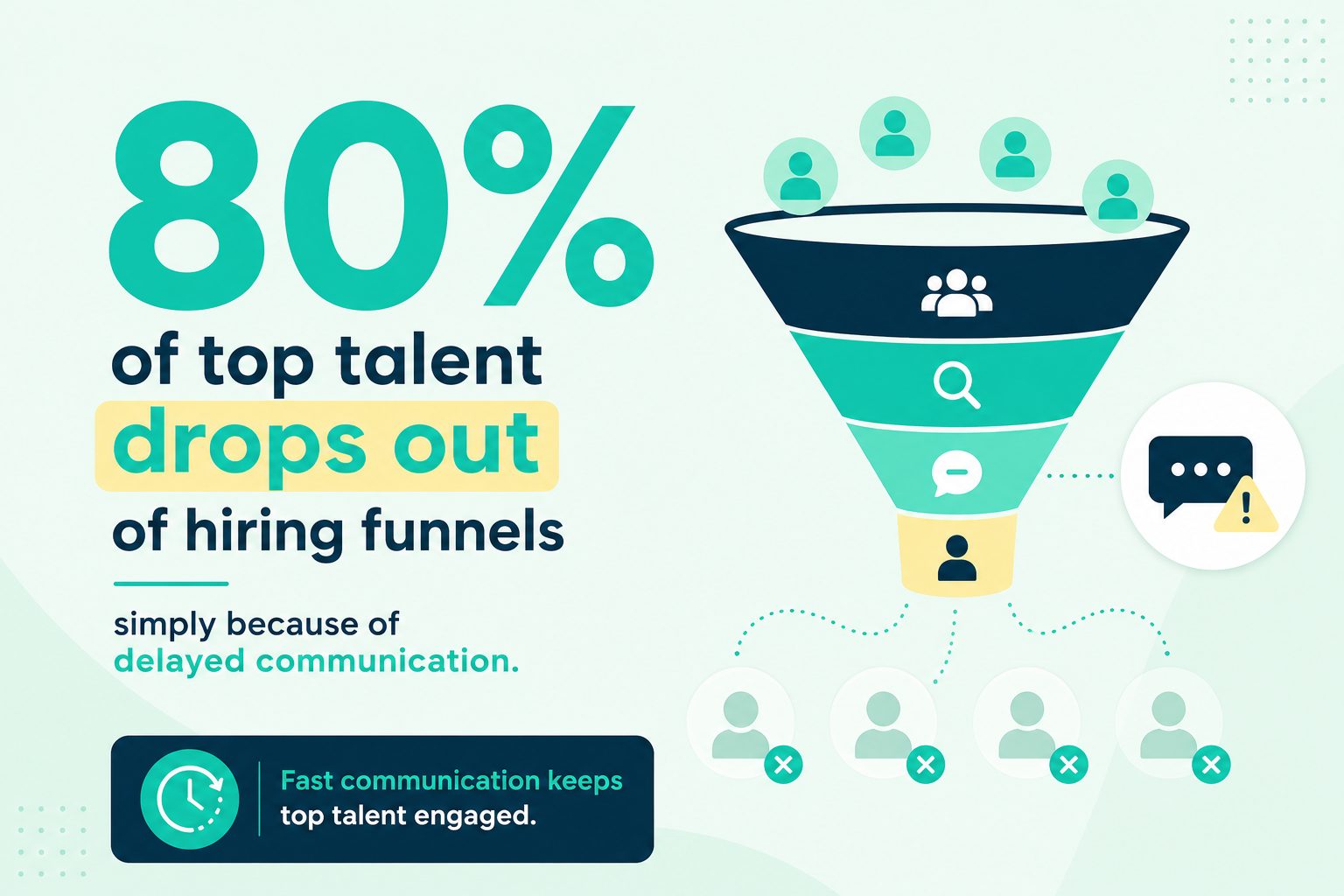
The Ghosting Stat: Recruitment data indicates that 80% of top talent drops out of hiring funnels simply because of delayed communication or a slow time-to-hire.
If your process takes more than 10 business days from first contact to final offer, you aren’t losing candidates because they rejected your role — you are losing them because your competitor sent an contract first.
4. Poor employer branding is quietly hurting recruitment
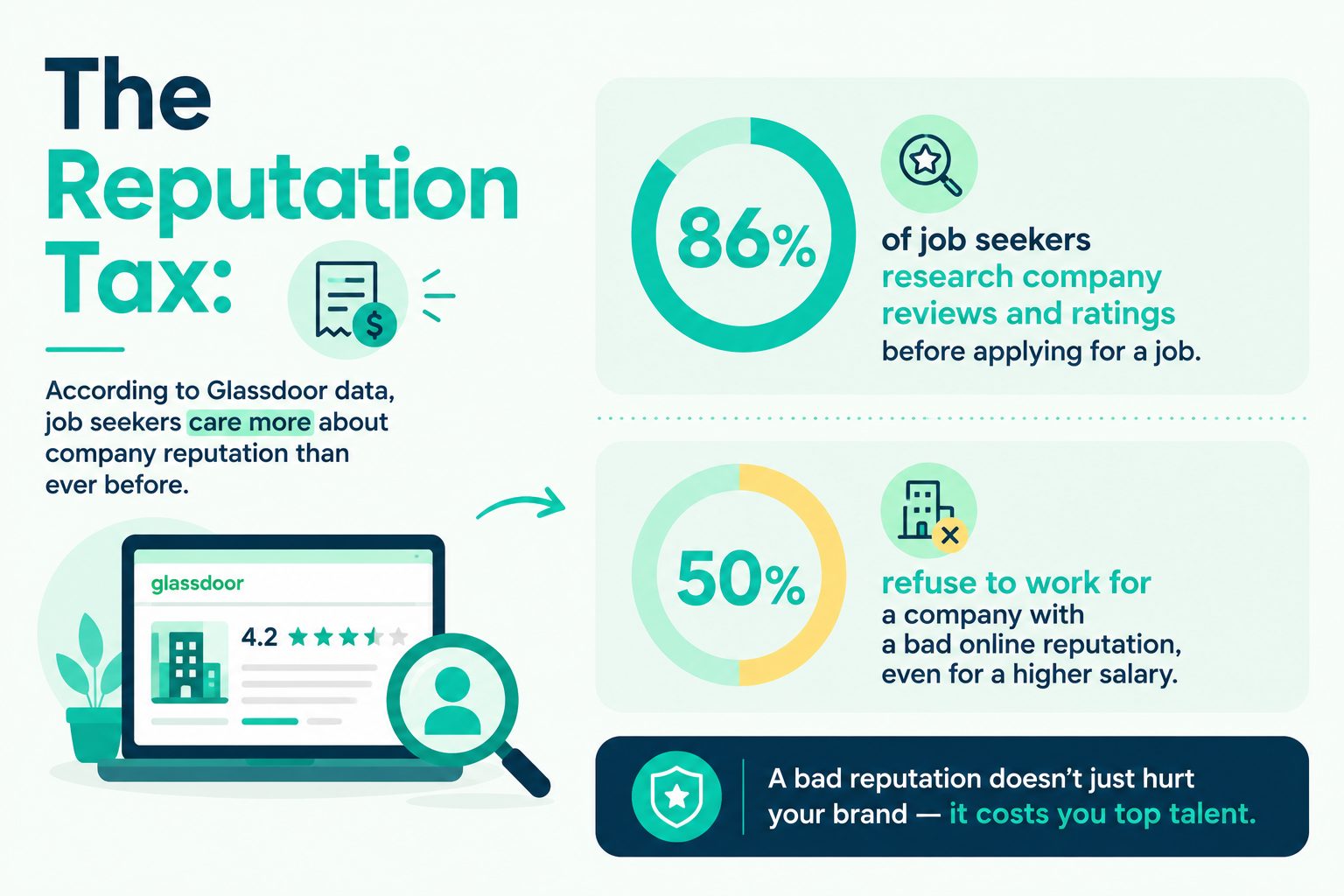
Candidates now deeply research employers on Instagram, TikTok, LinkedIn, and Glassdoor before hitting “Apply”.
The Reputation Tax: According to Glassdoor data, 86% of job seekers research company reviews and ratings before applying for a job, and 50% refuse to work for a company with a bad online reputation, even for a higher salary.
If your online presence looks outdated, corporate, or inactive , candidates assume your workplace culture is weak and that the experience abroad won’t match their expectations.
5. Candidates Want Experiences — Not Just Jobs
Today’s international candidates are not only searching for employment opportunities — they are searching for connection.
For many Gen Z professionals, moving abroad can feel exciting but also emotionally overwhelming.
That’s why companies that help employees integrate socially tend to attract and retain talent more successfully.
Organizations that offer:
- local community integration
- social events
- mentorship programs
- multicultural environments
- employee support networks
create a stronger sense of belonging from the very beginning.
Candidates increasingly choose companies where they believe they can build a life — not just complete a contract.
The recruitment experience itself has become part of a company’s reputation.
International candidates actively share their relocation experiences online through:
- TikTok
- Glassdoor
- expat communities
A stressful onboarding process, poor communication, or lack of housing support can quickly damage employer perception.
On the other hand, companies that provide smooth relocation experiences and human-centered onboarding are generating stronger employer brands organically.
In today’s market, every candidate experience becomes marketing.
And the companies investing in employee wellbeing before Day 1 are becoming the most attractive employers globally.
6. Transparency Builds Trust
When companies hide information or communicate vaguely about wages, contract types, or working hours, candidates lose trust quickly.
The Salary Transparency Push: Studies show that job postings that clearly list the salary range and specific benefits receive up to 30% more applications and suffer significantly lower drop-off rates during the interview phases.
7. Multilingual Candidates Expect Human Communication

Automation is growing in recruitment, but international candidates relocating abroad face uncertainty and stress. They need human interaction.
The AI Backlash: While ATS automation helps filters, over 65% of candidates express frustration when communication feels entirely robotic and generic.
Companies that inject personalized, human communication and a friendly onboarding process build massive trust advantages.
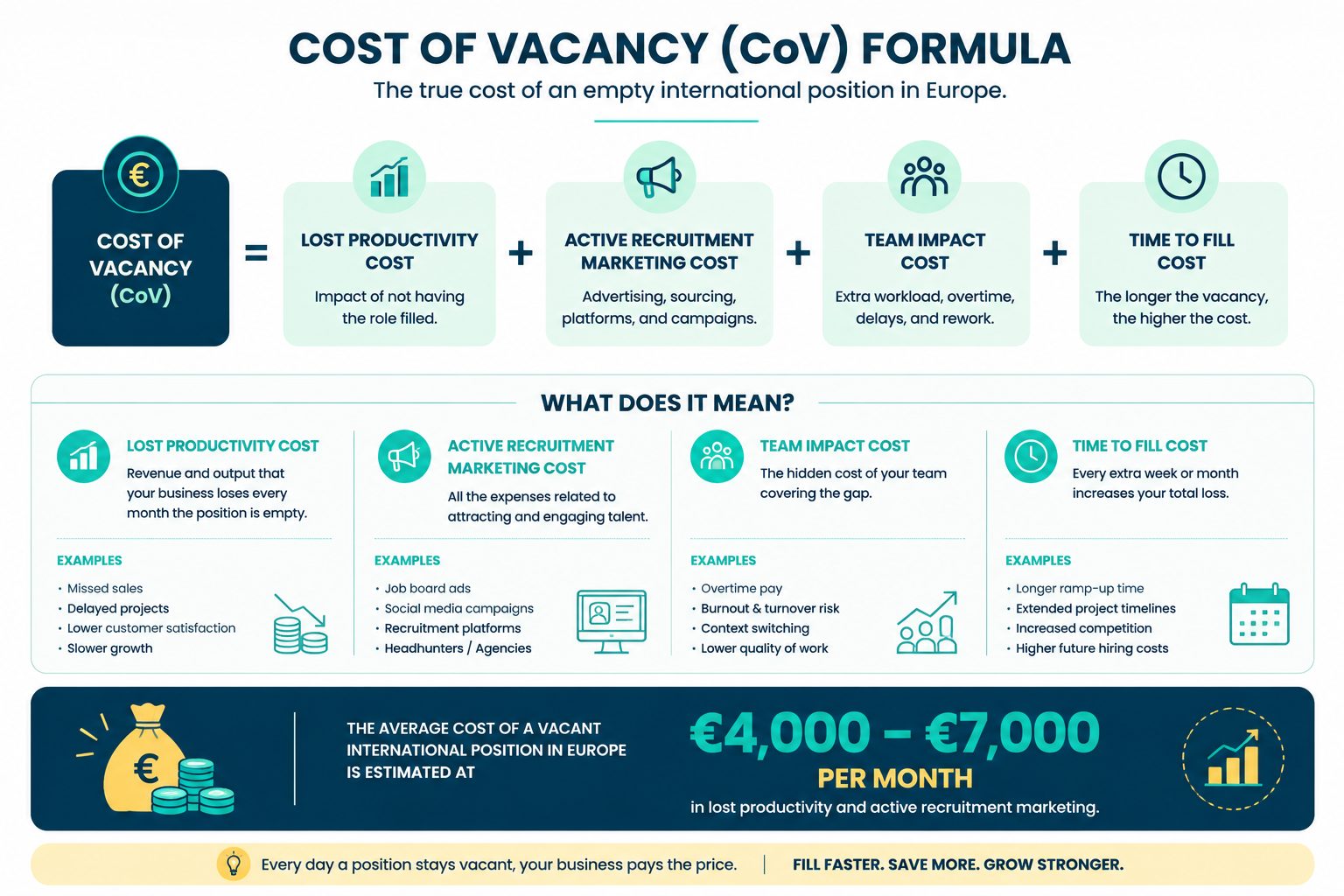
8. The Financial Cost of Losing Candidates
Improving candidate conversion (turning applicants into hires) is 3x more cost-effective than spending more budget on job boards to get more raw applicants.
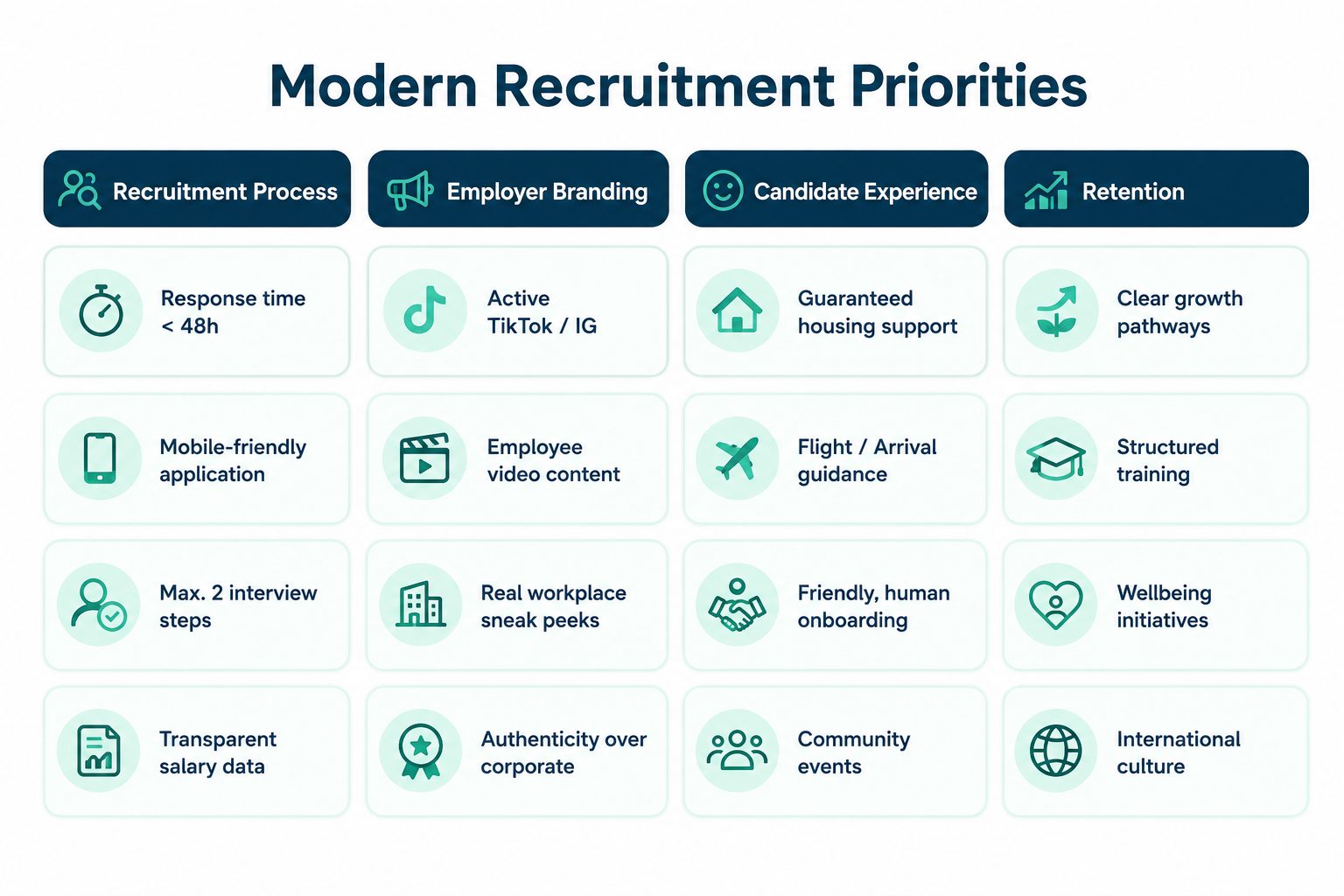
The Bottom Line: Why They Choose Your Competitors Over You
Multilingual candidates are not disappearing from the market. They are simply choosing employers that move faster, communicate better, and offer stronger experiences. In 2026, candidates are no longer selecting only a job—they are selecting a lifestyle.
Organizations that invest in speed, transparency, and authentic branding will dominate European international recruitment. Those that don’t will continue losing talent without ever understanding why.